

Brunello di Montalcino wines
Brunello di Montalcino represents the pinnacle of Italian winemaking, a robust red born from the sun-drenched hills of Tuscany. It shows the excellence of Italian wines, its unique terroir and the quality of the sangiovese grape.
Whether you're a novice wine drinker or a serious collector, Brunello reveals why it's revered worldwide. Its geography, the evolution of the winemaking itself, the production intricacies and many other factors makes brunello unique.
Let dig deeper in the story of Brunello di Montalcino wine.
The Location: The Heart of Tuscany
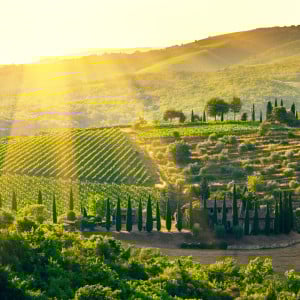
In the heart of Tuscany, around 40 kilometers south of the historic city of Siena, you will find the beautiful hilltop town of Montalcino. This is the exclusive birthplace of Brunello di Montalcino. The wine region, which has been a UNESCO World Heritage Site since 2004, covers 24,000 hectares, coinciding with the historical borders of the municipality. The landscape is a stunning panorama of rolling hills, very old olive groves and dense forests. Only 15% of the land is dedicated to vineyards. The hills have elevations ranging from 150 to 500 meters above sea level.
The region's climate is among Tuscany's warmest and driest, with average annual rainfall around 700 mm, compared to 900 mm in nearby Chianti. Protected by Monte Amiata, central Italy's highest peak at over 1,700 meters, Montalcino is shielded from extreme southern winds while benefiting from cooling sea breezes from the Tyrrhenian Sea, about 30 miles west. This Mediterranean influence moderates temperatures, so grapes can ripe consistently—a week earlier than in Montepulciano. The landscape is covered with ancient oaks, wild boar, and truffle-rich forests, so making it a special place and real goal for enotourism.
A Rich History
Viticulture in Montalcino goes back to over two millennia, to the Etruscan age. The roots of Brunello dates back to the early 14th century, with records of a red wine called "Brunello" produced in Montalcino.
The definitive chapter begins with Clemente Santi, a visionary winemaker who, in the mid-1800s, started isolating and vinifying a specific clone of the Sangiovese grape. This grape, known locally as “Brunello”, was especially grown for producing wines of extraordinary longevity. In 1869, Santi’s 1865 vintage was awarded a silver medal, and that started the first major appreciation and recognition for this new wine. His grandson, Ferruccio Biondi-Santi, released the first modern Brunello in 1888. That wines was aged for more than 10 years in oak barrels.
For decades, Brunello wines were rare. The production was limited, so was the number of fans for this wines. Only Biondi-Santi produced it commercially, but vintages like 1888, 1891, 1925, and 1945 became legends. Because of the increasingly awareness of the quality of Brunello wines, the expansion followed: 11 producers by the 1960s, 25 by 1970, and 53 by 1980.
The Consorzio del Vino Brunello di Montalcino, founded in 1967, started to promote Brunello. In 1968, it received the DOC status, and in 1980, it became one of Italy's first DOCG wines alongside Barolo.
By the 21st century, over 200 producers produced nearly 330,000 cases annually. This official status, together with the growing number of producers, moved Brunello onto the international stage: it went from an elite delicacy into a global benchmark for quality.
Vineyards and Soils: A Complex Terroir
The terroir of Montalcino is very diverse, and it is a key factor in the wine’s complexity. The region’s geology is a rare mix of soils from different geological eras.
These soils vary significantly with altitude, which ranges from 120 to 650 meters above sea level. It creates different microclimates: higher sites (up to 500m) produce elegant wines, while lower sites in the valleys along the Orcia River produce more robust wines. The northern slopes are cooler with fewer sunlight hours and produce more powerful and aromatic profiles. The vineyards with southern and western exposures, are more influenced by sea winds and deliver extra power and complexity.
There are three main soil type characteristics:
- Galestro - A crumbly, schist-based clay soil, common in the higher elevations, offering excellent drainage.
- Alberese - A hard, limestone-based marl.
- Clay & Sand - Lower altitudes often feature soils with higher proportions of clay and sand from ancient sea bed deposits.
This mix of different soils, combined with varying altitudes and exposures to the sun and wind direction, creates numerous distinct microclimates. The climate itself is predominantly Mediterranean, dry and mild, with ample sunshine to ensure the gradual and complete ripening of the grapes. This unique combination of factors allows Sangiovese to grow in an unmatched way from anywhere in the world.
The Grape: Sangiovese Grosso
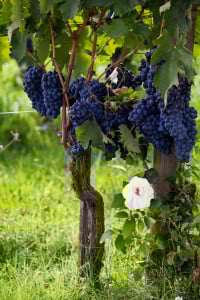
Brunello di Montalcino must be made from 100% Sangiovese grapes by law. The specific clone, Sangiovese Grosso (or “Brunello”, meaning "little brown" for its dark berries), is unique to this region.
This thick-skinned variant, confirmed in 1879 as identical to Sangiovese, grows at its best in Montalcino's terroir and ripens better and fuller than anywhere else. It develops high tannins, a more than average acidity, bold fruit, and aging potential.
No blending is allowed under the DOCG rules, thereby ensuring purity. However, nearby in the Sant'Antimo DOC, it is allowed to add international varieties like Cabernet Sauvignon, but Brunello remains varietal.
The Winemaking of Brunello
The production of Brunello is protected by strict regulations to ensure the ripening process and its ability to age. After fermentation, the wine must age for a minimum of two years in oak casks, followed by at least four months of bottle aging (six months for Riserva). A Brunello can only be released to the market on January 1st of the fifth year following the harvest (the sixth year for Riserva).
The wines must be bottled in Montalcino with a minimum 12.5% ABV. After the harvest, extended maceration (up to 30 days) extracts color and flavor. Fermentation follows, often with malolactic conversion for softness.
There are two main philosophies for the aging process:
- Traditional: Aging in large, neutral Slavonian oak casks (botti) that impart minimal wood flavor, allowing the wine’s fruit and terroir to develop at its best. This method produces more austere, classically structured wines.
- Modern: The use of smaller French oak barrels (barriques), which develops more notes of vanilla and spice, so more like the richer and internationally styled wines.
Underperformers may declassify to Rosso di Montalcino after 1 year.
Many top producers use a combination of the two, to achieve a balance between tradition and modernity.
The Taste of Brunello
A great Brunello di Montalcino can be quite a tasting experience. It typically shows a deep ruby color that changes to garnet with age. The nose is intense and complex, developing a range of aromas: dark cherry, plum, blackberry, dried roses, violets, leather, tobacco, and balsamic notes. On the palate, the wine is full-bodied, warm, and robust, with a fleshy texture, firm tannins, and vibrant acidity. The finish is long and
persistent.
Brunello can be drunk young, but at least a decade of cellaring is better to allow the tannins to soften and the complex tertiary flavors to emerge.
Brunello and wine pairing
The robust structure and savory character of Brunello make it a real partner for rich dishes with many flavors. The more than average acidity of Brunello cuts through rich dishes. Succesful pairings include steak and other meat dishes.
It is an exceptional match for:
- Roasted and Grilled Meats: Bistecca alla Fiorentina, roast lamb, or game birds.
- Rich Stews: Dishes like wild boar stew (cinghiale in umido) or braised beef.
- Aged Cheeses: Hard, savory cheeses such as aged Pecorino Toscano or Parmigiano-Reggiano.
- Earthy Flavors: Dishes featuring mushrooms or truffles, which complement the wine’s complex aromatics.
Famous Brunello producers
There are many Brunello wine producers, almost all of whom produce superb Brunello wines. However, there are a few among them that are considered the absolute best. Below are a few examples; this list is, of course, not exhaustive.
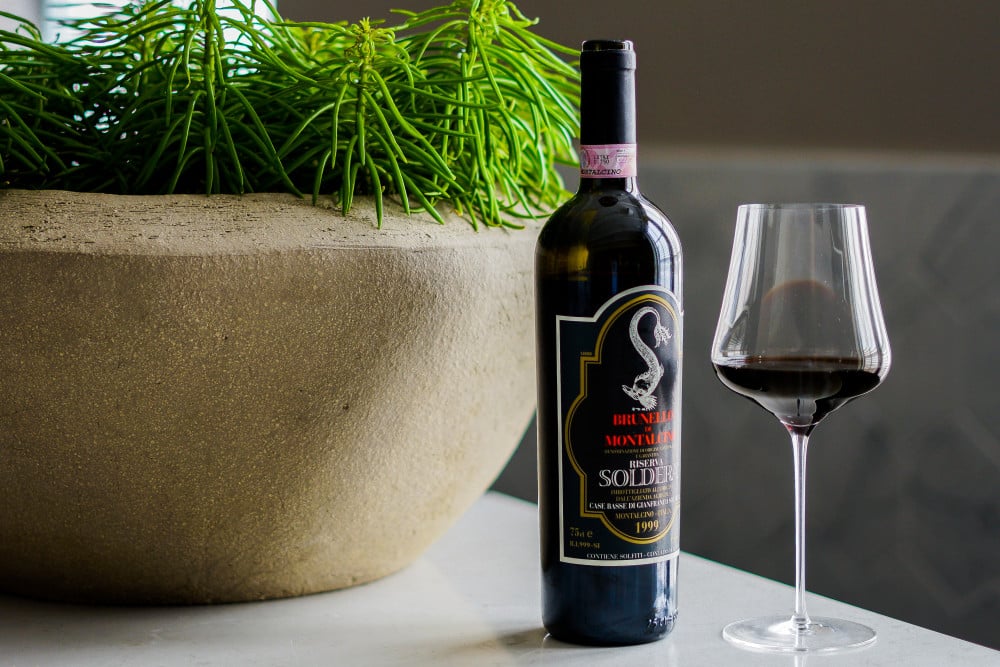
- Soldera
- Casanova di Neri
- Poggio di Sotto
- Biondi Santi
- Il Marroneto
- Canalicchio di Sopra
- Cerbaiona
- Il Poggione
- Col D'Orcia
- Le Ragnaie
There are many Brunello wine producers, almost all of whom produce superb Brunello wines. However, there are a few among them that are considered the absolute best. Below are a few examples; this list is, of course, not exhaustive.
Aging and Cellaring
Brunello di Montalcino is one of the world’s most age-worthy wines. The wine’s structure, built on high acidity and tannin, allows it to develop and improve for decades. Top vintages from elite producers can continue to develop for 30, 40, or even 50 years.
Good cellaring in a cool and dark environment with good humidity is essential to allow the wine to reach its full potential.
Investing in Brunello
The combination of high quality, limited production, and exceptional longevity makes Brunello a very popular asset for wine investors. The world’s most renowned critics consistently give high scores to top Brunello, thereby incearing the demand. Great Brunello di Montalcino from high quality producers are blue-chip collectibles, especially from top vintages.
And: investing in Brunello is not just a financial decision; it also gives a lot of joy for years to come.
