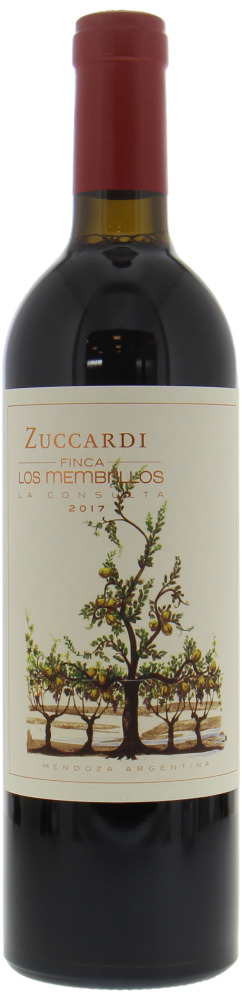
| Classification | Cru Classe |
| Type | Red |
| Producer | Zuccardi |
| Vintage | 2017 |
| Country | Argentina |
| Region | Mendoza |
| Grape | Cabernet Sauvignon |
| Alcohol % | 14% |
| Volume | 0,75 |
| Condition | Perfect |
| Label | Perfect |
| Drinkable | -2038 |
| Stock | 27 |
The 2017 growing season in Mendoza was warm and dry, with low yields after a harsh spring. For the Cabernet Sauvignon from Paraje Altamira, this means small, thick-skinned and concentrated fruit. The Finca Los Membrillos 2017 wine from Zuccardi reflects just that. This is a denser, more structured vintage than the cooler 2016, with the savory, stony character that Altamira typically brings to Cabernet.
I noticed the variety in the 2017 Finca Los Membrillos a lot more than in the 2018, as Cabernet Sauvignon is very sensitive to heat and gets stressed easily. When they bought the vineyard, it was planted to just Cabernet Sauvignon, but they later bought land around it and planted Malbec, Cabernet Franc and Semillon, so the wine can change in the future... It was a low-yielding year and they picked late, resulting in a wine with 13.8% alcohol. It has herbal and ripe aromas of blackberries, a medium to full-bodied palate and abundant, slightly dusty tannins. It matured in 500-liter oak barrels and is very balsamic and minty, with notes of camphor, and it feels more developed than the wines from 2018. 3,200 bottles were filled in August 2018.
The first impression is graphite and crushed stone, then the cassis comes through, dark and a bit brooding. Hints of bay leaf and floral notes are also felt. In the mouth, the tannins are firm but delicate. This is not the chewy, jammy Cabernet often found in Argentine wines. The finish is long and savory, with a salty, mineral flavor; the 2017 wine should be left in bottle for a few more years before opening.
The winery's Finca Los Membrillos is made from 100% cabernet sauvignon. It uses no Malbec or Cabernet Franc to soften its flavor. So why bottle it in its purest form? Because cabernet behaves differently on calcareous soils at over 1,000 meters above sea level than it does in the warmer Luján de Cuyo. You get firmer tannins, fresher acidity and notes of graphite and laurel that Bordeaux fans will recognize. Thanks to the grapes not being blended, it speaks clearly of the earth.
Drink between 2026 and 2038; the 2017 still has firm tannins and fresh acidity that needs a few more years to settle. Store at 12-14°C. With time, graphite and stone nuances become deeper and the fruitiness shifts from blackcurrant to dried blackberry and tobacco.
The Zuccardi company did not start with wine. It began with irrigation systems. Alberto Zuccardi planted vines in Maipú in 1963 to demonstrate his technical skills. Since then, the family has perfected what came out of that accident: the third generation, Sebastian Zuccardi, shifted his focus to the high-altitude Uco Valley in the early 2000s and opened his current winery in Paraje Altamira in 2016. He is considered one of the most exciting producers in South America today, partly because he has moved away from the oaky, jammy style of Mendoza that made the region famous.
The Paraje Altamira winery is located in the southern part of the Uco Valley, which was granted Geographical Indication status in 2013. The soils are shallow sandy topsoil over a large gravel subsoil coated with calcium carbonate. This limestone coating gives the Cabernet Sauvignon its chalky tannins and salty flavor. At an elevation of approximately 1,100 meters, the region has hot days and cold nights. Rainfall is less than 250 millimeters per year. Without the melting snow from the Andes feeding the Tunuyán River, nothing would grow here.
The main attraction here is simple. Sebastian Zuccardi and winemaker Laura Príncipe ferment their wines in concrete tanks with indigenous yeasts and age them in concrete or large 2500-5000 liter neutral foudres. Why? To let the lime soil speak for itself, not the blend. And it is remarkable. It tastes of stone and fruit, not vanilla and toast. No pumping over to extract every last bit from the grapes. The result is a Cabernet that feels like an Argentine Cabernet, not something borrowed from Napa or Bordeaux.
Cabernet at high altitudes requires protein and some char. Remember the Mendoza classic:
Serve at 16-18°C. Decant about 1 hour before serving.
With track & trace code