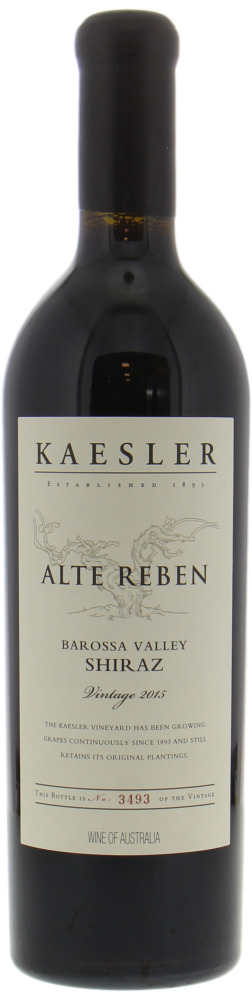

| Classification | Cru Classe |
| Type | Red |
| Producer | Kaesler |
| Vintage | 2015 |
| Country | Australia |
| Region | South Australia |
| Grape | Syrah/Shiraz |
| Volume | 0,75 |
| Condition | Perfect |
| Label | Perfect |
| Drinkable | -2034 |
| Stock | 1 |
The 2015 growing season in the Barossa Valley was warm, dry and low-yielding, with flavors concentrated in the older vines of Shiraz near Nuriootpa. Alte Reben (German for "old vines") refers to the very dense fruit planted in plots dating back to 1899. Compared to cooler vintages, this wine should be more ripe and muscular.
Previously reviewed from barrel in Issue 227, the 2015 Alte Reben Shiraz is now in bottle and looks fantastic. Pencil shavings, raspberries and thyme blossoms all appear on the nose, while the full-bodied palate delivers spicy complexity, ripe, creamy-textured tannins and terrific length. From a vineyard in Marananga planted in 1899, this is intense, supple and just downright great juice.
An old-vine bottling from 1899 plantings. It delivers strong blackberries, mulberries, red plums, spiced earthy notes and crushed flowers. Ethereal. This has a soulful and profound appeal on the palate with a sleeve of dark, spice-dusted blackberry and blood-plum flavors. The power is effortless here.
First impressions: density. The 2015 Alte Reben impresses with ripe blackberry and dark plum, which then moves into spicy aromas reminiscent of clove, black pepper and a whisper of licorice. French oak adds mocha and cedar but doesn't mask the fruit. The palate is full-bodied, with firm tannins but already approachable, with the alcoholic warmth characteristic of a warm Barossa Shiraz.
Kaesler Alte Reben is 100% shiraz and is made from vines planted between 1899 and the 1960s on sandy loamy red soil in Nuriootpa. So why is the age of the vines so important? The berries are small, the roots are deep and the yields are low. This allows for concentration and savory complexity (leather, earth, dark spice), which is not the case with younger Barossa Shiraz wines, where fruitiness dominates everything else.
At its peak now, but will continue to develop through 2034; the 2015 has tannic grip and fruit concentration; Barossa Shiraz of this style tends to soften and develop leather, tobacco, and dried fig notes. And it does.
Kaesler Estate is located on one of Australia's oldest vineyards and was given to the Kaesler family in 1893. Why the estate is so important today: in 1999, Reid Bosward and Ed Peter bought the old, neglected vines and set about restoring them. The 1893 shiraz plot is still fruiting. Best of Wines offers Kaesler because few producers in the Barossa combine such vineyard depth with winemaking precision.
In Kaesler's home neighborhood, the soils are sandy clay loams with limestone underneath. Why is this important? Because the Barossa is hot and dry (annual rainfall is around 500 mm) and this clay layer holds moisture when the vines need it. The vineyards are dry-farmed without irrigation, with vines grown as bush vines. This allows for deep rooting, which is ideal for Shiraz of this concentration. Marananga, located on the western slope of the valley, gives structure and tannins to the wine.
A crucial choice at Kaesler is to keep each plot with old vines separate until the final blending, because the 1961 plot is different in flavor from the 1930s plot, and Reid Bosward wants to hear what each has to say before blending the wines. The grapes are hand-harvested, destemmed and fermented in open-top vats. Aging takes place in French oak barrels, which are larger than barriques (standard 225-liter barrels from Bordeaux), so the oak influence is present but not so expressive.
Big Barossa Shiraz needs fat and charcoal to balance the tannins and ripe fruit. Taste:
Serve at 17-18°C. Decant one hour before serving.
With track & trace code