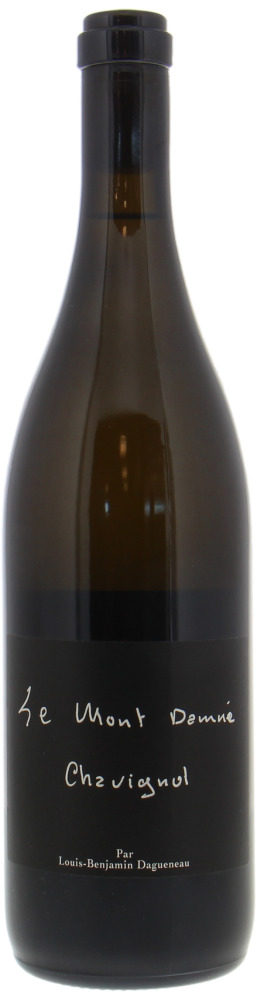

| Classification | Cru Classe |
| Type | White |
| Producer | Didier Dagueneau |
| Vintage | 2019 |
| Country | France |
| Region | Loire |
| Appellation | Sancerre |
| Grape | Sauvignon Blanc |
| Volume | 0,75 |
| Condition | Perfect |
| Label | Perfect |
| Drinkable | -2030 |
| Stock | 0 |
The 2019 growing season in Sancerre was warm and dry, with spring frosts in April resulting in lower yields across the Loire. For Sancerre on the Kimmeridgian escarpment at Chavignol and Dagueneau at Le Mont Damné, bunches were small but very concentrated. The limestone preserved the acidity; the 2019 vintage wine is dense, salty and ready for long aging, with the discipline of the Dagueneau vintage applied to the Sancerre.
The first thing that catches the eye is the salty flavor. Then flavors of lemon curd, white peach and crushed oyster shell emerge. Typical Kimmeridgian character - chalk dust, wet stones and a salinity that persists through the finish. On the palate, the 2019 is denser than it looks. Real sharpness, real length. Most bottles will keep for another three to five years. Skeleton.
Sauvignon Blanc. It is not blended or flavored with other varieties. So why is it so important here? Because Sauvignon Blanc behaves differently on the Kimmeridgian marl of Le Mont Damné than on Silex in Pouilly. The smoky flint is gone, while the chalk, citrus zest and tighter mid-palate are enhanced. In 2019, the heat pushed ripeness, but the limestone kept the grapes honest.
Drink between 2026 and 2038, but the optimal aging period is 2028-2033. The acidity and salinity, not the weight of the fruit, is what holds this wine together; it should be stored horizontally at 12-14°C to avoid temperature fluctuations. With aging, the citrus gives way to honey, beeswax and deeper chalky notes.
Didier Dagueneau didn't just make Sauvignon Blanc. He rewrote the rulebook for Sauvignon Blanc in the Loire. He borrowed techniques from Burgundy, fought the over-cultivation of farming in the region, and did barrel fermentation, something no one else was doing. He died in 2008. His son Louis-Benjamin and daughter Charlotte soon took over the company and in 2018 reclassified the wines as Vin de France and abandoned the appellation system. It's a provocative move that is in keeping with the family ethos. Since then, the wines have become even more refined.
Le Mont Damné is located in Chavignol, one of the most respected areas of Sancerre. The slopes are steep, almost 45 degrees in places, directed from south to southeast. The soil is Kimmeridgian marl (clay and limestone filled with oyster fossils), the same stratum as in Chablis. Why it's important. This marl stores water in dry years and pushes the vines deeper into the soil, giving the wine the minerality and acidity due to the chalk. Sauvignon Blanc on this soil is unique.
Dagueneau's Burgundy approach: indigenous yeast, no acidification, no clarification, long maturation on lees for about 12 months without bâtonnage. Oak is used for texture rather than flavor. Standard barrels, 320-liter cigar-shaped barrels and 600-liter foudres are used. After barrels, the wine is aged for several months in tanks before being bottled. Points. You get the gravity of a true white Burgundy wine without the vanilla veneer. That's why this Sauvignon ages so well.
The local AOP goat cheese, Crottin de Chavignol, is also made in the same village. This is not a coincidence, but a textbook combination. Beyond:
Serve at 10-12°C. Wine that is too cold weakens the chalky flavor.
With track & trace code