

Torrione
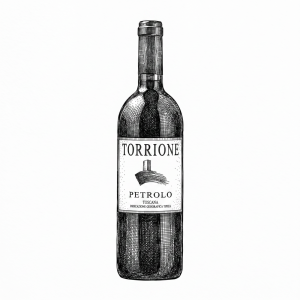
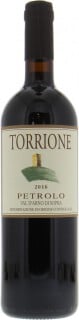
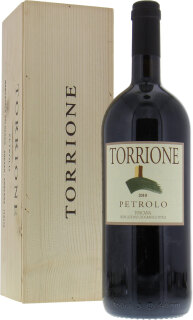
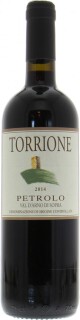
“Torrione” is a blended wine produced by “Petrolo” from Sangiovese grapes, made in a corner of Tuscany that most wine lovers wouldn’t even be able to find on a map. Valdarno di Sopra is located between Florence, Arezzo, and Siena and borders the southeastern tip of Chianti Classico. In 1716, Cosimo III de’ Medici recognized this hilly region as one of only four regions in Tuscany producing wines of the highest quality. Subsequently, this region remained unknown for several centuries.
It was “Petrolò” that restored its former glory. And it was the “Torrione” wine that took on this important mission. While “Galatrona” (100% Merlot from the same winery) attracts worldwide attention, it is “Torrione” that has established Valdarno di Sopra as a full-fledged Sangiovese-producing region. In our opinion, this wine can be called the benchmark for this appellation.
About Petrolo
Petrolò is headed by Luca Sanjust, the grandson of Gastone Bazzocchi, who acquired this winery in the 1940s. In the early 1980s, Luca was a recognized young artist, but he later returned to his homeland to continue the family business. It is precisely his “outsider’s” perspective that is reflected in the choices made here. The first Merlot vineyard was planted in 1990. In 1994, when the late-harvest grapes were processed separately, the “Galatrona” wine emerged almost by accident.
We work with “Petrolò” wines precisely because this winery defies standard conventions. They practice organic farming here, without irrigation or plowing, and yields are strictly limited to an extremely low level—20–25 hectoliters per hectare. This rigor is reflected in the glass.
History & Heritage
The most interesting moment in “Petrolò’s” history was not the acquisition of the winery in the 1940s. In 1834, agronomist Giorgio Perrin, who at the time was the owner of “Petrolò” and a member of the “Accademia dei Georgofili,” discovered that a plot of land called “Campo Ashutto” (now known as Boggina) was ideally suited for growing Sangiovese. Nearly two centuries later, those same hills continue to produce the winery’s most authentic wines, which are based on Sangiovese.
“Torrione” serves as a bridge between the winery’s historic reputation and what Valdarno di Sopra represents today. The vines in Boggina, planted in 1947, are the oldest at this winery. The origins of “Trione’s” DNA are deeply rooted in this continuity.
Terroir & Climate
The Petrolo vineyards are located on hills at an elevation of 250–500 meters above sea level within the Valdarno di Sopra DOC zone. The soil consists of marl, sandstone, and shale, typical of the entire Chianti region, and is characterized by good drainage and a rich mineral structure. This corner of Tuscany is distinguished from warmer regions by the surrounding forests. The dense forests surrounding the vineyards, combined with the elevation and varied sunlight conditions, significantly lower nighttime temperatures.
This cooling effect is important for the Sangiovese grape variety. Cool nights preserve acidity and slow down ripening, giving the “Trione” wine not only a robust structure but also freshness. The planting density is approximately 5,500 vines per hectare, which encourages each vine to avoid producing an excessive yield and instead compete for moisture.
Grape Varieties
Torrione is made primarily from Sangiovese, with Cabernet Sauvignon and Merlot serving as complementary varieties. The exact blend proportions vary depending on the harvest. Sangiovese, with its high acidity, firm tannins, and characteristic aromas of cherry and earth, forms the backbone of the wine. The two Bordeaux varieties round out the wine’s edges, imparting a rich fruitiness and a soft fullness that is often lacking in pure Sangiovese in cooler vintages. At this elevation and on this soil, this blend works because the fruity notes of the Bordeaux varieties compensate for the moments when the Sangiovese might seem a bit weak.
Winemaking
At “Petrolò,” the approach to aging wine in the cellars varies depending on the flavor profile the winemakers wish to express. “Galatrona” is aged in French oak barrels, “Boggina A” in terracotta amphorae, and “Torrione” in “botti,” huge wooden barrels traditionally used in Tuscany.
This choice is of great importance. Small barriques impart aromas of vanilla and toasted bread, while large botti allow the wine to “breathe” slowly without overly emphasizing the oak character. For a blend based on the Sangiovese grape, this is the right choice. The wine’s flavor is defined by fruit, soil, and the freshness inherent in a cool climate, rather than by oak aromas. The grapes are grown using organic farming methods; no irrigation is used, and the entire area is covered with natural grass. Yields are intentionally kept low, which is the source of the wine’s concentration in the bottle.
Food Pairing
Torrione’s acidity and firm tannins call for fats and proteins. For example:
- “Bistecca alla Fiorentina”: a classic Tuscan bone-in steak. Cooked “rare” and sprinkled with salt
- Pappardelle with wild boar ragù. The rich flavor of the game harmonizes perfectly with the wine’s earthy notes
- Roasted lamb with rosemary and garlic. The aroma of the herbs directly echoes the wine’s bouquet
- Aged Pecorino Toscano. Its umami creates an exquisite contrast with the tannins
Serve at 16–18 °C. They say that “what grows together goes well together,” and Tuscan cuisine was made for wines like this.
Serving Suggestions
Torrione wine should be served at 16–18 °C. Typical room temperature in the home is too high, causing the wine to lose its freshness. Young vintages should be decanted for at least an hour to allow them to breathe. Exposure to air is necessary to soften the tannins. For bottles aged more than 10 years, 30 minutes is sufficient. A standard Bordeaux glass is suitable. There’s no need to be overly concerned about choosing the right glass.
Vintages
The flavor of Torrione changes noticeably depending on weather conditions. In warm Tuscan vintages, the Cabernet and Merlot varieties come to the fore, giving the wine a denser and more direct flavor; such a wine can be enjoyed for 5–8 years. In cooler vintages, the Sangiovese backbone takes center stage, resulting in a wine with a firmer structure and a richer flavor, but it will take about 10 years for its true charm to unfold.
If you plan to drink the wine this year or next, choose bottles that have been aged in the bottle for 8 to 12 years. The tannins soften, and secondary aromas (leather, dried herbs, tobacco) emerge. If you plan to store the wine in your cellar, choose vintages with a robust structure and let them rest for 10 years. Older vintages are typically sold at high prices, but the wait is well worth it.

Cellaring Potential
Most Torrione vintages are ready to drink about 5 years after harvest and, under proper storage conditions, will age without issue for 15–20 years. The Sangiovese’s structure, with its high acidity, drives the wine’s long aging potential, while the Cabernet Sauvignon’s tannins lend the wine additional depth. Bottles should be stored in a dark place, lying horizontally, at a constant temperature of 12–14 °C. Over time, the initial fruity notes recede into the background, while nuances reminiscent of earth and leather come to the fore.
FAQ
Is Torrione a Chianti Classico?
No. Petrolo is located in the Valdarno di Sopra DOC zone, which borders Chianti Classico but lies outside its appellation.
Is Torrione a “Super Tuscan”?
In the spirit of the concept—yes. It is a blend based on Sangiovese, with the addition of Cabernet Sauvignon and Merlot, produced outside the traditional rules of Chianti. The label reads “Valdarno di Sopra DOC.”
What is the difference between Torrione and Galatrona?
Galatrona is a 100% Merlot aged in French barriques, which is often compared to wines from Pomerol. Torrione, on the other hand, is a Sangiovese-based wine aged in large barrels and rooted in Tuscan traditions.
Is Torrione suitable for aging?
Yes, if it’s a high-quality vintage, it can be aged for 15 to 20 years without any problems, and in some cases even longer.
