

Lodovico
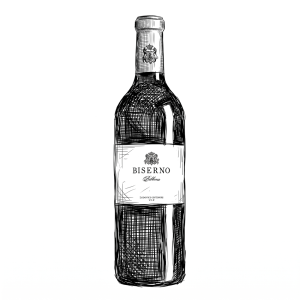
The "Lodovico" wine from Tenuta di Biserno was named after one of its creators, Lodovico Antinori. He is also the winemaker who founded Ornellaia in the 1980s and sold it in 2002. After the sale, he and his brother Piero began searching for a new plot in Bibbona, located just north of Bolgheri. They found it on a hill in the Upper Maremma, and "Lodovico" became the masterpiece of this project.
Although this wine from Bolgheri is made from grape varieties of Bordeaux origin, it occupies an interesting position on the map. It belongs to neither the Bolgheri DOC nor Chianti, and the label does not list any of the well-known appellations of origin. The Antinori brothers planted Bordeaux-origin varieties on hilly terrain that no one had previously taken seriously. This wine is their answer to the question of whether this venture was worth it.
About Tenuta di Biserno
Tenuta di Biserno is not a historic winery with 600 years of history. It is a deliberate fresh start. Piero and Lodovico Antinori, together with their nephew Niccolò Marzichi Lenci (the current CEO), developed this project in 2001 and began producing wine in 2006. Although the name "Antinori" carries the weight of centuries of history, the “Biserno” winery itself is young, ambitious, and focused on the Bordeaux style.
This enterprise consists of three estates: Biserno, Campo di Sasso, and the small Cru Collemezzano. Each is managed separately and has its own unique soil composition. The consulting winemaker is Michel Rolland, who previously worked alongside Lodovico at Ornellaia. The reason our winery is involved with this estate is that there is no other producer in this hilly region who is so passionately committed to creating Bolgheri-style wines.
History & Heritage
What is particularly interesting is not so much the creation of Biserno itself as its backstory. In the 1980s, Lodovico Antinori founded the “Ornellaia” winery in Bolgheri, and after selling it in 2002, he returned to the hilly lands of Bibbona, which he had long had his eye on. He knew the coastal area well. He knew that Bordeaux grape varieties could thrive here. And he had already overcome all the challenges once before.
The 2006 vintage was the first to be released for sale. "Biserno" is the winery's flagship wine, and "Lodovico" is a top-tier wine named after the man who brought this project to life. Despite its short history, it is rooted in winemaking expertise that once caused a real sensation in the Italian wine world.
Terroir & Climate
Bibbona is a municipality located immediately north of Bolgheri, in the upper Maremma, overlooking the Tyrrhenian Sea. The “Biserno” estate itself is situated at an elevation of about 90 meters above sea level, and it is important to note that, thanks to this elevation, nighttime temperatures here are lower than in the flat coastal vineyards located further south. The local soils consist mainly of alluvial deposits, clay, and limestone, making them ideal for growing Cabernet Franc and other Bordeaux-origin varieties.
This mixture of clay and limestone offers two advantages. On the one hand, it retains moisture during the dry Tuscan summer, and on the other, the limestone imparts a rich flavor and mineral notes to the wine, creating a refined balance among the ripe fruit flavors. Sea breezes from the Tyrrhenian Sea temper the heat. The combination of all these factors allows for the creation of wines distinguished not only by their power but also by their robust structure.
Winemaking
Michel Rolland serves as a consultant, and his approach is clearly reflected in the winemaking methods. Grapes from each plot are fermented separately, followed by blending. No yield regulation is practiced in the vineyards. The estate is certified under the Integrated Plant Protection (SQNPI) program, and although it has not yet achieved fully organic farming, responsible viticulture is practiced across all three estates.
"Lodovico" is the Biserno estate's top-tier cuvée, made from grapes selected from the best plots. Varieties of Bordeaux origin (Cabernet Franc, Merlot, Cabernet Sauvignon, Petit Verdot) are harvested at full ripeness, fermented separately for each plot, and aged in French oak barrels. The style characteristic of the Biserno estate is distinguished by its refinement and mature flavor, but thanks to Bibbona’s high elevation, the wine does not acquire a cloying, jam-like sweetness. It is precisely this tension that constitutes the essence of this wine.
Food Pairing
"Lodovico" possesses tannins and richness that can hold their own even against the heartiest meat dishes. Here are a few recommended pairings:
- “Bistecca alla Fiorentina” (Tuscan bone-in steak). Simply grilled, seasoned only with salt and olive oil
- “Brasato al vino rosso” (beef braised slowly in red wine)
- Pappardelle with wild boar ragù: brings out the characteristic herbal notes of Cabernet Franc
- Aged Pecorino Toscano (hard sheep’s-milk cheese): allows you to enjoy the contrast with the tannins
Serve at 18 °C. At higher temperatures, the alcohol will be too pronounced.
Serving Suggestions
Serve at 18 °C. Since room temperature is often higher, remove the bottle from a cool, dark place 30 minutes before serving and do not leave it at room temperature. Young vintages should be decanted for at least 90 minutes, and older bottles (over 15 years old) for 30 minutes, to allow the wine to breathe. It is best to use large Bordeaux glasses. To fully reveal the wine’s charm, it must come into contact with air.
Cellaring Potential
Powerful vintages can be enjoyed until at least 25 years after release. The driving force behind the wine’s maturation is not only the tannic structure derived from the Cabernet Sauvignon and Petit Verdot grape varieties, but also the natural acidity inherent in the grapes from the Bibbona vineyards, located at high altitudes above sea level. Store the bottles horizontally in a dark place at a constant temperature of 12–14 °C. Over time, nuances of cedar and graphite come to the fore, the fruity notes soften, taking on the flavor of dried berries, and the texture becomes silkier. The patience required to let a young wine rest for at least five years after release will be well rewarded.
