

Alzero
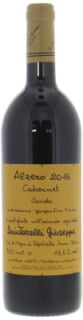
“Alzero” is a wine created by Giuseppe Quintarelli when he decided to break completely with the traditions of Valpolicella. He used neither Corvina nor Rondinella, but instead three Bordeaux varieties: Cabernet Sauvignon, Cabernet Franc, and Merlot, which he dried on reed mats in the same way as the grapes for Amarone. The result was a wine that belongs in a category of its own. Officially, this wine cannot even be called “Valpolicella,” since it is made from grape varieties not permitted under the rules of that appellation. However, its production method is a true Negrar style.
Giuseppe, affectionately known as “Bepi,” produced “Alzero” only in vintages he himself deemed good enough. This alone explains why this wine is so hard to come by. Our store stocks this wine precisely because no one else produces such an appassito wine from a Bordeaux blend that enjoys such enthusiastic support. It is a one-of-a-kind creation among Italian wines.
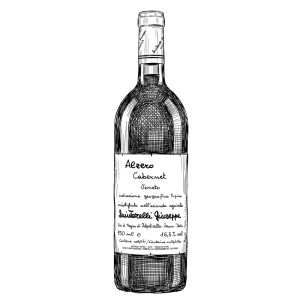
About Quintarelli
Quintarelli does not have a website. Nor does he have social media accounts. To purchase, you must join a waiting list. Every bottle is hand-signed, and this is their sole marketing strategy. Bepi Quintarelli took over from his father Silvio in the mid-1950s, but at a time when most of Valpolicella was engaged in the mass production of industrial wines for supermarkets, he went in the opposite direction. Everything was done by hand. He would not release vintages he did not like onto the market. He passed away in January 2012, and the winery was inherited by his daughter Fiorenza, her husband Giampaolo Grigoli, and currently by their sons Francesco and Lorenzo. “Quintarelli” wines are still part of our selection precisely because their philosophy has remained unchanged.
History & Heritage
Silvio Quintarelli, after previously growing grapes under a sharecropping arrangement elsewhere in Valpolicella, founded this winery in 1924 in the village of Negrar. That’s how it all began. However, the main character in this story is Bepi. He took over management in the mid-1950s and, for six decades, continued to follow a path that was the exact opposite of the direction in which Valpolicella was developing from a commercial standpoint. The "Alzero" wine itself was born out of this spirit of defiance—it is a Bordeaux-style blend that is vinified in the same way as Recioto. Since 2012, management has passed to Fiorenza and Giampaolo, and the winery is now run by the fourth generation. For consumers, this tradition is significant because the winemaking methods have remained virtually unchanged: a long drying period, extended aging, and a deliberate release to the market.
Terroir & Climate
The vineyards are located on the eastern side of the Negrar Valley, in the Valpolicella Classico region, at altitudes ranging from 150 to 460 meters. The soil is a mixture of limestone and basalt—a typical composition for these volcanic slopes. The winery itself is located at the top of Ca Paletta Hill in Cere, and this elevation above sea level offers distinct advantages. Because the vines are above the valley fog, they receive more sunlight, which promotes better ripening. This is a particularly important factor for the Cabernet Sauvignon variety. Cabernet cannot ripen consistently in cool, damp areas. The moderating influence of Lake Garda’s climate and the cool night breezes from the Lessini Hills ensure a long and gradual ripening of the grapes, which is subsequently further concentrated during the “appassimento” (dry ripening).
Grape Varieties
The "Alzero" wine is made from three grape varieties of Bordeaux origin:
- Cabernet Sauvignon: serves as the wine’s foundation, imparting black currant aromas, structure, and tannins
- Cabernet Franc: adds an aroma reminiscent of shavings from a pencil sharpener, as well as brightness and lightness
- Merlot: adds soft notes, creating a plum aroma and a velvety smoothness that unfolds on the palate
The drying process radically changes the characteristics of this wine. After appassimento, the sugar content becomes more concentrated, the alcohol content increases, and what was originally a classic Bordeaux style transforms into a wine with a richer and sweeter taste. The addition of Franc prevents the wine’s flavor from becoming diluted. It is precisely because each grape variety contributes its own unique characteristics that this blend turns out so well.
Winemaking
One important point should be noted here. Quintarelli processes the Bordeaux grapes in the same way as the grapes for Amarone. After the harvest, the grape clusters are laid out on reed mats and dried for at least five months. The moisture evaporates, the sugar concentrates, and the flavor becomes deeper. Pressing is carried out slowly, after which the wine is fermented using local yeasts for about 50 days and then aged in large Slavonian oak barrels for several years. Not just a few months, but several years. That is why the cellar always holds several vintages at different stages of aging. “Al-Zero” is released only after Bepi, and now the entire family, deem it “ready.” The result is a wine that combines the concentration characteristic of Amarone with the robust structure typical of Médoc.
Food Pairing
“Alzero” is so full-bodied that it holds its own against braised or roasted meat dishes served with a slightly sweet sauce. Here are a few recommended pairings:
- Brasato all’Amarone (beef carefully braised in red wine)
- Slow-roasted lamb shoulder with a rosemary and honey glaze
- Wild boar ragù with pappardelle
- Aged Parmigiano-Reggiano on its own. Its umami flavor contrasts with the wine’s residual sweetness
Avoid delicate dishes. This wine will overpower the flavors of fish, chicken, or light pastas. Serve at 16–18 °C. It is recommended to open the bottle at least 2 hours before serving.
Serving Suggestions
Serve at 16–18 °C. Since typical room temperature in a home is higher, drinking “Alzero” at 22 °C will make the alcohol taste stronger and the wine itself seem heavy. Young wines should be decanted for at least 90 minutes, and wines aged for more than 15 years should be decanted for at least an hour. Use large Bordeaux glasses. It takes time for the aroma to develop.
Vintages
Alzero is produced only in vintages that Quintarelli has deemed worthy; therefore, there are no intentionally “weak vintages.” Nevertheless, its characteristics vary from year to year. In warm years, Alzero turns out to be more intense and vibrant, with pronounced notes of dried fruit and balsamic vinegar. In cooler years, the wine retains more of the Cabernet Franc’s freshness, developing a more defined profile, refined tannins, and longer aging potential. Since this wine is aged in barrels for many years before release, it has already matured to a certain extent by the time it hits the market.
If you plan to drink the wine in the medium term, vintages from warm years will suit you best. If, however, you plan for long-term aging, cooler vintages with a more robust structure will best reward your patience. In any case, you can’t go wrong with any of the released vintages.
The best vintages of Quintarelli Alzero Cabernet
The level and quality of this wine is very high. However, some exceptional vintages are: 1993, 1997, 2001, 2004, 2006, 2009, 2017.
Cellaring Potential
The wine’s structure is designed to withstand long-term aging. Its distinctive features include high concentration, achieved through the appassimento method, firm tannins derived from the Cabernet Sauvignon grape and aging in Slavonian oak barrels, as well as acidity preserved by the elevation above sea level. Store at a constant temperature of 12–14 °C, away from light and vibration. Over time, the aromas of dried fruit gain depth, evolving into notes of leather and truffle, while the tannins become softer. The wine can be enjoyed even when young, but the longer you wait patiently, the more fully its true value will unfold.
FAQ
Is "Alzero" a Valpolicella wine?
No. It is made from Bordeaux grape varieties rather than Corvina and Rondinella, which are required for the Valpolicella designation of origin. The wine is classified as IGT.
Why is “Alzero” such a rare wine?
Quintarelli releases only those vintages that he considered good enough, and the estate’s total annual production is about 60,000 bottles. “Alzero” accounts for only a small portion of this volume.
Is “Alzero” an Amarone?
No. However, it is produced using the same drying method, called “appassimento.” It can be considered Bordeaux grape varieties processed using the Valpolicella method.
Can “Alzero” be aged for more than 20 years?
Yes. The optimal drinking window is on average between 10-30 years after release and with proper storage, a bottle will easily last longer.
