

Wines from Austria: all you need to know
Austria is located in the center of Aurope, tucked between Germany, Czechia, Slovakia, Hungary, Slovenia, Italy, and Switzerland. There is around 44,000 hectares of vineyards in the main wine regions Niederösterreich (Lower Austria), Burgenland, Steiermark (Styria), Wachau, and Wien (Vienna).
Austria is the home of Grüner Veltliner, the peppery and green apple aromatic grape and of course, like neighbour Germany, Riesling. But there so much more varities cultivated in Austria's vineyards. And the wines from this array from grapes vary from fresh dry to very sweet.
There is so much to tell about Austrian wines, lets dig deeper ....
Where is the history behind Austria's wine legacy?
It all began around 700 BC when viticulture took root in Austria's soil, with the discovery of grape seeds present in urns at Zagersdorf. With the embrace of Roman rule, the cultivation of grapes grew fast, especially when Emperor Marcus Aurelius Probus lifted the ban on grape growing north of the Alps, speeding up viticulture into new heights. Austrian winemaking really took off in the 16th century. A famous Trockenbeerenauslese batch from Donnerskirchen in Burgenland showed off Austria's skill at making top wines.
Austria played a leading role in the international wine world. In 1860, Austria opened the Klosterneuburg wine institute. Well-known Austrian grapes such as Zweigelt and Blauburger were created through crosses with other grape varieties. This institute remains influential to this day, providing training to many top-level Austrian winemakers internationally.
Is Austria’s Winemaking Traditional?
Yes and No. Family-owned winemakers have a close connection to traditional customs follow ancient methods that has been passed down through generations. One of these methods involves the use of artisan techniques to produce wines of high-quality, even when this specific custom is strictly controlled by the government.
Also, some ancient methods which have been past down in the family are seen in Austrian vineyards. One historical tool which is called and is called ‘’the Kvevri’’ is used in winemaking and is associated with winemaking in Eastern Europe and the Caucasus. The kvevri is an ancient clay vessel and of importance for its use in wine fermentation and aging. They are made of clay and earthenware and allow a controlled exchange of oxygen. So, the wine is stored in clay vessels rather than modern containers, which allows for a moderate exchange of oxygen during fermentation. This gentle exchange is critical to the development of the wine and delivers various textures and aroma's giving the wine a layer of complexity and personality. However, this method is rarely used in present day winemaking. But non the least, this old practice is essential for producing wines with extraordinary and distinctive qualities.
While modern winemaking frequently uses stainless steel tanks or oak barrels for these processes, Austria's use of such a traditional method shows the commitment of traditional winemaking approaches.
In recent years, viticulture has seen an increase in the use of organic and biodynamic processes in the winemaking practices. Despite the importance of nature within the winemaking community, Austria's commitment to natural winemaking is not as globally recognized as some other winemaking regions. However, winemakers are focused on sustainable practices, and increasingly when looking at the past. These practices are based on organic and biodynamic principles, to procedures to improve soil health and increase vineyard biodiversity they employ more natural and holistic procedures. By doing so they emphasize on working in harmony with nature. So, they avoid the use of synthetic pesticides and chemicals, and also limiting the overall intervention of the winemaker. And therefore, winemakers strive to develop wines that authentically reflect the vineyard's terroir by allowing the grapes and environment to naturally express themselves in the final product. This way, they are contributing to the country's diverse and progressive approach to winemaking.
Why are Austrian wines unique?
The location of the vineyards of Austrian wines plays an important role in the quality of its wines. The wine country is situated between the moderate, humid Atlantic and the continental Pannonian climates. Therefore, winemakers benefit from sunny days, warm weather and cool, northerly winds in the summer and fall. These climate changes contribute to aromatic wines with an ideal balance of freshness, body and character.
The wine regions of Austria are known for their exceptional vineyards. Some are located at remarkably high elevations. Vineyards are cultivated along the Danube (Donau) River's steep slopes (which is near Wachau, Kremstal, and Kamptal). These hillsides are known for their dramatic slopes. They are frequently terraced to enable the cultivation of grapes in this challenging yet rewarding terrain. This is yet another traditional method in Austria and has been in use in these regions for centuries. By terracing the slopes the winemaker is able to manage the vineyard. This method helps to prevent soil erosion and maximizes the amount of sunlight needed for the vines.
The grapes cultivated in Austria: a real diversity
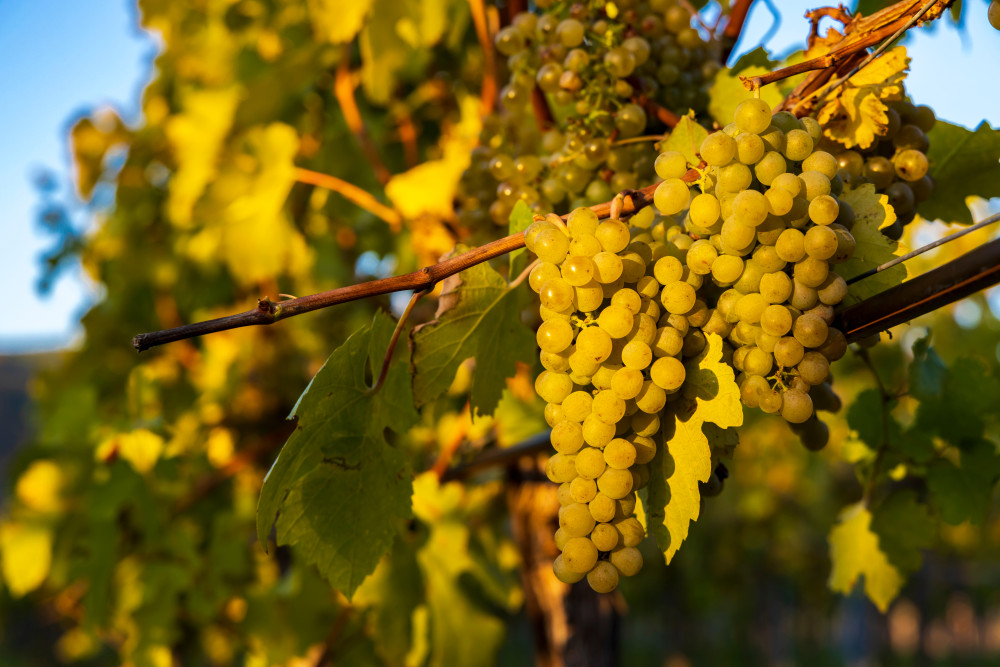
The Gruner Veltliner is the grape that is almost synonymous with Austrian wine. In fact, it comprises the bulk of the countries wines produced also responsible for a large amount of exports. But is not how bulk is usually seen like low quality and drinkable table wine. In fact, this grape has positioned the nation as a respected player on the world scene.
Austria is very good with both foreign and domestic grape types. Some popular ones such as Riesling, Sauvignon Blanc, and Pinot Noir all do exceedingly well, but specific sites in the country show wines defined as finesse and regional origin. Austria’s vinicultural appeal is not limited to whites. It also expands to the subtlety and freshness of its reds.
Indigenously grapes are also cultivated such as Zweigelt, Blaufränkisch, and Sankt Laurent and are commonly combined in delightfully complex cuvée blends, perfectly balanced with Merlot or Cabernet. In other areas, delicate Pinot Noirs are created that can compete for international dominance.
Winemakers are exploring new grape to diversify their range and style of wines. The movement towards experimenting with new grape types is pushed by a number of causes; global warming has forced some Austrian vintners to discover and grow grape varieties that may be more suitable for changing climatic conditions. Furthermore, there is growing interest in diverse and unique wines across the globe which has driven winemakers to diversify their products so as to appeal to a wider market base.
In Austria some wineries are growing Shyrah, Chardonnay and also indigenous varieties that are less known from other regions. Thereby, winemakers are able to complement these grapes with the once they already cultivate in the country.
Austria’s Mastery in diversity proves even when working with foreign grape varieties. It affords the country a competitive angle to winemaking.
Could Zweigelt and Blaufrankisch start a new era for Austrian wines?
The spotlight of the dominant Austrian grape has long shone on Gruner Veltliner. However, the sales of wines made from Gruner Veltliner sales have plateaued. The reason for this related to the market, as new generation of consumers is more interested in sampling alternative variants. Therefore the quest for fresh alternatives has emerged in Austria´s wine country, which takes you to the other important grapes of Austrian viticulture, namely Zweigelt and Blafrankisch. These grapes can be defined by vibrant red varietals and have emerged as the starters of a potential second wave regarding the wine exports of the country.
Could Zweigelt and Blaufrankisch herald a new era for Austrian wines? The answer lies within the palates of discerning wine experts, but Austria's winemakers continue to redefine the nation's vinous identity in this ever-evolving landscape. The introduction of fresh kinds of grapes provides an additional facet to Austria’s wine-making profile. By doing so, winemakers show their ability to adapt and innovate with the aim of creating a broad spectrum of wine styles while maintaining the quality and character that define Austrian wines.
What are the best wines and wine producers in Austria?
That is of course in many ways a question where the answer depends on who you ask. But in general you can highlight a number of wine estates:
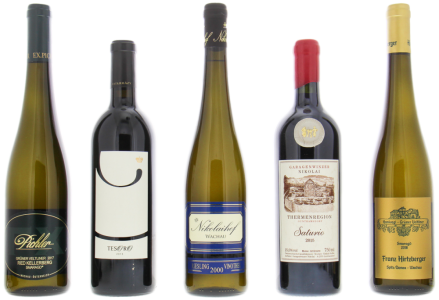
- F.X. Pichler - The vineyards of F.X. Pichler are scattered over the villages of Dürnstein and Loibner in Niederöstereich. His Unendlich wines are one of the best Gruner Veltliner of Austria and even worldwide.
- Franz Hirtzberger - Located in the westernmost part of the Austrian Wachau region in the tiny village of Spitz. Famous for its Honivogl and Singerriedel Riesling.
- Kracher - The master of sweet wines (Beerenauslese, Trockenbeerauslese, Eiswein) made from a variety of grapes like Scheurebe, Welschriedling, Zweigelt. Worldwide one of the best price-quality dessert wines.
- Emmerich Knoll - With ist very classical label, one of the beste wineries for Riesling and Gruner Veltliner. His rare Vinothekenabfulling wines are famous worldwide.
- Prager - Always high scoring Riesling and Gruner Veltliner wines, for very competitive prices.
- Nikolaihof - Famous for its very aged Riesling Vinothek wines, bottled after 20 years+.
How Is Astrian wine doing globally?
In the wine world the market evolves continuously, and every wine area evaluates their place and responds based on the emerging trends. How a countries wine industry is defined and the specific needs required to produce excellent wines is crucial in their market positioning.
To start, the wine industry of Austria faced competitive challenges due to its fragmented nature. The reason is mainly related to the industry that is comprised of many medium sized wineries that are family owned. Larger wine countries success relates to their high volume wineries that are more efficient in common, face more international recognition for their brands, and have a higher advertising budget on average.
However, they do celebrate successes which is rooted in a robust identity as their wines are renowned for their quality and authenticity. Therefore, Austria sees an expanding global recognition and is emerging as the most intriguing wine-producing country today! The evidence can be traced to the total exports of their wines in key markets such as Switzerland, USA, Netherlands, Poland, Russia, China, Japan, and many more. Which is surprising, as the country wine production only accounts for 1% of the global wine production, and they only export less than a quarter of their national wines.
So, Austria’s viticultural landscape is dominated by family owned estates. Most importantly, they prioritize quality over mass production and coupled with their artisanal methods and strict yield restrictions. This does restrict the winemakers from engaging in entry-level pricing usually, but for their premium vintages they gain international acclaim. Some of their wines show exceptional value and are recognized as being the worldwide finest.
How can viticulture adjust to evolving climate conditions?
In Austrian viticulture sustainability is crucial. Partly because of the intensive nature of the country, which requires winemakers to involve substances for crop protection and growth, and also, a substantial amount of expenses are made on energy, water and transport. Additionally the weather conditions are susceptible to changes such as prolonged droughts and heavy rainfall. This is also exacerbated by climate change and therefore prompts important considerations for Austrian winemakers.
About three-quarters of Austria's vineyard area adheres to integrated production principles, which is based on integrated crop protection methods. This type of winemaking, as named integrated viticulture prioritizes grape production that is profitable as well as results in a high-quality wine while emphasizing people's health, resource conservation, and environmental protection. They view vineyards as agricultural ecosystems which guides all of the practices related to grape cultivation.
In the 1980s, Austria’s wine producers increased the use of pesticide which caused growing issues and therefore promoted the scientific scrutiny of their impact on ecosystems and evaluation of potential harm to beneficial organisms. They placed restrictions or even complete prohibitions on harmful agents and compounds for those applying these products in the vineyard. Throughout the year, soil management remains crucial and therefore incentivized winemakers to look at alternative production methods.
And what about the Austrian wine scandal in the 1980's?
In 1985, the notorious Austrian wine scandal involved the adulteration of diethylene glycol in wines. The scandal is also called the antifreeze scandal as this substance is the main ingredient of antifreeze in some brands. By adding this substance wines are made more sweet and also fuller-bodied, however it is not for consumption intended. In the international wine fair in 1984, other winemakers wondered how the Austrian wines could have such a full body. Before there was no investigation into the use of diethylene glycol in the production of wines, but it was discovered by an anonymous tip reported to the authorities of Vienna’s.
This severely damaged the reputation of Austrian wines globally. It led to a significant decline in sales and exports, dealing a massive blow to the industry. Therefore, the wine industry needed to show rigorous efforts to restore consumer trust and confidence. Currently, there are strict regulations set on the winemakers in the production of wines, emphasizing on the preservation of the wine's origin and quality. Therefore, the scandal and the regulations imposed reflects the diverse and dynamic world of Austrian winemaking, as they blend heritage with innovation and showcasing the nation's commitment to producing quality wines through varied and evolving techniques. It is a historic and remarkable recovery, which placed Austria in the top segment of quality winemakers.
The Wine Classifications in Austria
Austria’s framework representing quality classifications and the control on the assessment plays a central role in wine legislation of the country. Quality levels are determined by specific names and each category ensures specific minimum quality criteria. This quality can be understood by simply looking for certain classifications on the label, but it can be tricky as there are so many in Austria. To understand these level, a quick list is shown below, from highest quality to easy wines the denominations are:
Wine with a Protected Designation of Origin
1) Riedenwein or a Lagenwein
This wine is at the top of the pyramid. The wines are produced from a specific single vineyard or Ried, and emphasizes the distinct qualities of that vineyard.
For each specific "Ried" (vineyard) manual harvest and established yield limits are essential. They require extensive documentation, including historical data, soil characteristics, geological features, climatic information, production volumes and market value of their wines.
2) Ortswein (or village wines)
These wines originate from a specific municipality or town within a DAC region, therefore reflecting the local characteristics of that area.
3) Gebietswein (or regional wine)
Gebietswein can carry the label Qualitatswein ''DAC'' or Predikatswein. Qualitätswein is made from grapes harvested at a certain maturity level. They are not permitted to enrich the wines by by adding sugar or concentrate.
To further complicate matters, Austria also has a Prädikatswein system to characterize quality levels. Prädikatswein includes specific wine-growing regions and special wine styles without a DAC status. However, when a region has a DAC title, the regulations related to the DAC apply. Some wines categorized as Gebietswein do have achieved a higher level of refinement as in the case of Mittelburgenland DAC.
4) Austrian Sekt*
The designation "Sekt Austria," "Sekt Austria Reserve," and "Sekt Austria Große Reserve" is exclusively dispensed from glass bottles with the "Protected designation of origin’’ and has certified quality symbol. If a wine has the addition "Reserve," it means it has a more powerful style.
Wine With a Protected Geograpical Indication
5) ''Landwein''
It stands for wines with a protected geographical indication typical of a particular region or area in Germany.
Wine Classifications with no geographical origin
6) “Österreichischer Sekt” (“Österreichischer Qualitätsschaumwein”)
These wines are classified only when the wine is made entirely from grape varietals permitted for the manufacture of Qualitätswein.
7) ''Wein''
This term replaced the formally referred name of ‘’Tafelwein’’. Which only applies if certain standards are met such as a minimal alcohol level.
Austrian wines, a summary
Austrian wines show a wide array of flavors and styles, from the very popular and highly praised dry whites like Grüner Veltliner and Riesling to smooth sweet dessert wines and refined red varietals. These wines show the versality and expertise in the winemaking of the country and the ability to innovate and build trust by regulations and reform. Their wines reflects Austria's commitment to quality, blending heritage with innovation, and presenting wine lovers with an ever changing, highly appreciated and ever-evolving wine adventure.
