

The Champagne riots of 1911
Have you ever wondered why pretty much every detail surrounding the world's most famous sparkling wine is regulated in Champagne? The growing area is limited to 34,200 hectares, divided precisely into several sub-regions, and the grape varieties and production methods are also specified. Yes, even the yield limit is precisely specified each year by the Comité Champagne. Now, one might think that all these strict regulations have only one goal: to ensure the exceptional quality of sparkling wine for which Champagne is famous worldwide. But in fact, that is only half the truth.
At the beginning of the 20th century, the law of the jungle still prevailed in this prestigious wine-growing region. The champagne houses had enormous freedom, while the winegrowers were mostly left behind. This mixture was an economic and social powder keg that exploded twice in 1911 with the Champagne riots – and in the aftermath of which this comprehensive set of rules was established, which still serves as a straitjacket for producers today. Let's take a trip back in time.
Champagne riots: what happened before
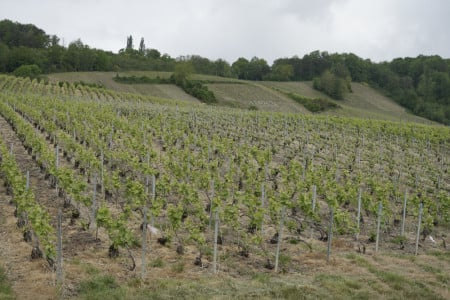
To understand why there were two powerful explosions in Champagne in 1911, we need to start a few years earlier in history, namely at the end of the 19th century. At that time, it was common for champagne houses to have little or no vineyards of their own, but to buy the grapes they needed from winegrowers in the region. But around the turn of the century, these winegrowers had hardly any grapes to sell. On the one hand, this was because a large part of the vineyards had been ravaged and destroyed by the legendary phylloxera pest. On the other hand, difficult weather conditions had also led to poor harvests.
Nevertheless, the houses still needed grapes – after all, demand for champagne was already huge at that time. In addition, the winegrowers demanded higher prices for their harvest, but the houses wanted to push the price down considerably. The fronts were deadlocked. True to Goethe's quote, ‘Why wander far afield? See, the good is so close!’ the maisons began to buy their grapes in the neighbouring département of Aube. This was precisely the region that today forms part of Champagne as the Côte des Bar. At that time, however, it did not yet belong to Champagne.
Two powder kegs emerge
When the winegrowers from Aube realised that the quality of their grapes was so good that they were suitable for champagne production, they promptly began producing sparkling wines themselves – and selling them as champagne. This, in turn, did not please either the original Champagne winegrowers or the houses. Aube was accordingly ostracised. In 1908, the winegrowers even obtained a decree against their colleagues from Aube, officially prohibiting them from continuing to call their sparkling wines Champagne.
Meanwhile, the houses began to buy grapes from other regions of France. The Loire in particular was a very grateful trading partner. Yes, even barrel wines were imported from Germany for champagne production! Of course, this did not suit the champagne winegrowers at all. They were furious. So furious, in fact, that the first powder keg exploded with a loud bang in January 1911.
First Champagne revolt in January 1911
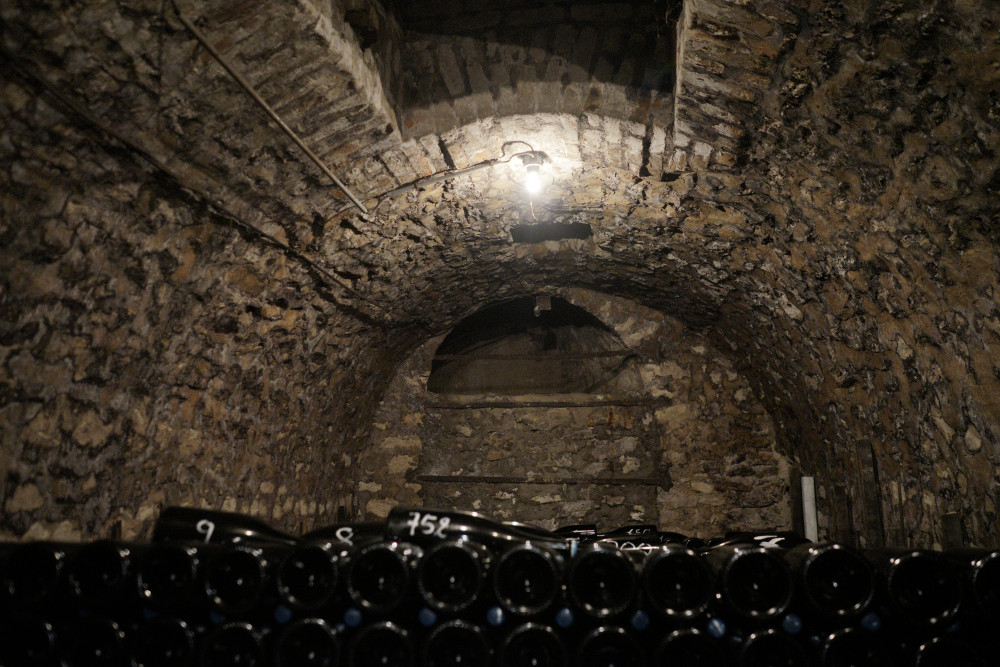
The region's winegrowers organised themselves and met secretly in the two small villages of Damery and Hautvilliers, where most of the warehouses of many champagne houses were located. They intercepted incoming deliveries from the Loire as an angry mob and destroyed all the grapes. But that was not all! The riots escalated. The winegrowers broke into the full warehouses and poured base wines and finished champagnes into the Marne River without hesitation. This, in turn, further heated up the mood. The angry mob demanded even more destruction. So they moved on to Aÿ, which was already one of the epicentres of champagne production at the time. The winegrowers stormed houses there and set them on fire. Aÿ was to burn!
In fact, they managed to reduce almost the entire town to rubble and ashes before the governor of the Paris region sent a telegram asking for help. The government immediately sent 40,000 soldiers to the region.
Suddenly, there was peace. This first Champagne revolt caused a great deal of damage, especially economically. But it also destroyed what little trust remained between winegrowers and houses. At least this civil war-like revolt did not cost any lives. However, that was soon to change.
Second Champagne revolt in February 1911
To prevent further unrest in Champagne, the French government quickly implemented the Champagne Law, which was already in the planning stages, after the first uprising. This law not only officially regulated for the first time which grape varieties could be used for champagne and how it had to be produced, but also where the grapes could come from. Namely, exclusively from Champagne itself. This clearly excluded the vineyards in Aube – and thus also their winegrowers. The interesting detail: some champagne houses secretly bought grapes from Aube anyway. The quality was simply too good. The Aube winegrowers, meanwhile, were almost lost in disbelief. First, they were no longer allowed to sell their sparkling wines as champagne, then they were even officially excluded altogether, and yet people in Champagne still wanted to profit from them? They finally lost their temper.
A few days later, their anger erupted into highly aggressive street battles, with winegrowers from Champagne and Aube fighting each other to the death. When the first fatalities occurred, soldiers were sent from Paris once again. But they were unable to control the situation. The street battles now shifted to cloak-and-dagger operations. Again and again, vineyards were set on fire and enemy businesses were destroyed. The soldiers stood by helplessly and always arrived too late. It was not until 7 June 1911 that the situation was somewhat pacified. The government relented and amended part of the Champagne law. Aube was now classified as a ‘deuxième zone’ and was thus allowed to produce ‘second-class champagne’. It was a brilliant political trick, but one that completely ignored the reality of life for those affected.
The conflict continues to smoulder
Because let's be honest: who wants to be second-class? Certainly not the winegrowers from Aube. Especially not when it comes to something as first-class as champagne. So the men began to fight for their businesses to finally be officially recognised as part of Champagne. Without any downgrading. However, the battle was no longer fought on the streets, but in the courtroom. And it remained unsuccessful for years. Neither the government nor Champagne itself relented. In 1914, the First World War put the recognition process for Aube on hold. Winegrowers became soldiers. Many did not return from the war. Both Champagne and Aube lost many fathers and sons. Even years after the war, both regions were still suffering from the wounds that had been inflicted and left scars.
Happy ending with a new addition to Champagne
But then France experienced an economic boom. Champagne was suddenly no longer reserved for the elite, but was also enjoyed by the middle classes. And they were very thirsty. In Champagne, however, production was only just getting back on track. It was impossible to quench this enormous thirst alone. For 1927, for example, sales of over 300 million bottles were forecast. The government and Champagne quickly realised that they would never be able to produce this enormous quantity without help from Aube.
As a result, from 1927 onwards, winegrowers from Aube were finally allowed to officially produce and sell ‘first-class champagne’. And on 22 July, they were even ceremoniously welcomed to Champagne as the Côte des Bar sub-region.
Economic interests thus ensured not only lasting peace, but also the current geographical boundaries of Champagne. And if this fascinating piece of French wine history has whetted your appetite for champagne, you will of course find a hand-picked selection of fine champagnes from the Côte des Bar and all other sub-regions at Best of Wines.
