

Cult wines from the USA: Sine Qua Non
A cult wine is one for which demand exceeds supply. Production volumes are extremely low; the wine is sold directly via allocation rather than through shops, and the waiting list is longer than the list of buyers itself. Prices on the secondary market bear virtually no relation to the amount the buyer originally paid.
The term emerged in Napa in the 1990s, where ‘Screaming Eagle’, ‘Harlan Estate’ and ‘Colgin’ set the tone, although Bordeaux ‘garage winemakers’ and several Burgundy domaines also fit into this narrative. Few wines fit this description better than ‘Sine Qua Non’, and none have followed such an unusual path.
The winery that never makes the same wine twice
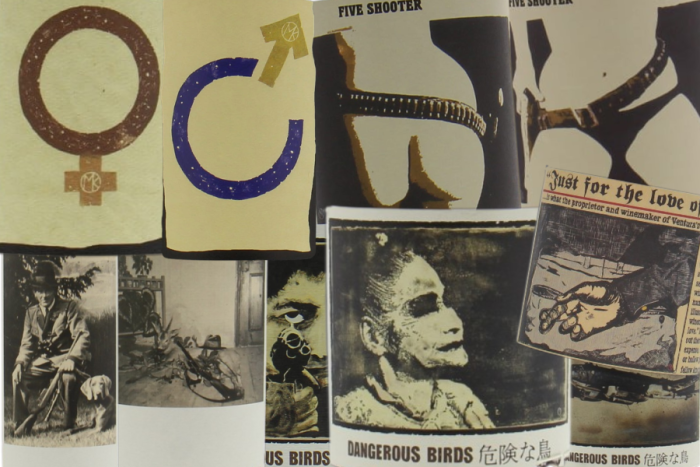
Most wineries spend decades developing their signature style, which they then carefully safeguard. Sine Qua Non takes the opposite approach. Every year, the wine is given a new name, a new label, often a new bottle shape and a new blend. You won’t be able to buy last year’s wine again, because it simply doesn’t exist. There is no flagship wine with a consistent appearance, no reliable point of reference, nothing to compare vintages from different years against, apart from the winemaker himself.
It shouldn’t have worked. From a commercial point of view, it borders on madness: there is no brand recognition, no repeat purchases of a familiar product, and the customer base is forced to trust not the label, but the producer themselves. Instead, the company has created one of the most sought-after wines in America, a waiting list stretching back years, and a whole stack of 100-point ratings.
And this isn’t in Napa. It’s worth mentioning this right at the start, because this assumption is often made. Sine Qua Non is located in Ventura County, in the hills north of Los Angeles, whilst its vineyards are scattered across Santa Barbara County. Geographically and culturally, it is a long way from Oakville.
From Austria to a warehouse in Ventura
Manfred Krankl was born in Austria in the mid-1950s and emigrated to the US in 1980. He did not arrive as a winemaker. He arrived as a hospitality professional, and for most of the 1980s and 1990s, that is precisely what he did: he was a managing partner at La Brea Bakery and Campanile, a Mediterranean restaurant in Los Angeles which he co-founded and which became one of the city’s most iconic restaurants.
He initially took up winemaking as a sideline. In 1992, he produced a Syrah called ‘Black and Blue’ at the Havens Winery in Napa. This was followed by further experiments with John Alban of Alban Vineyards, who became one of his first mentors, and with Brian Babcock. These were projects rather than a business.
Then came 1994. Krankl and his wife Elaine purchased grapes from three leading Californian producers of Rhône varieties (Alban, Stolpman and Bien-Nassido) and produced four and a half barrels of Syrah. That’s roughly 100 cases. They named it ‘Queen of Spades’. Krankl later explained that the name came from the impression the wine made on him: majestic and feminine. Robert Parker awarded it 95 points. One hundred cases were sold in an instant, mainly through ‘Campanile’, and the Krankls were faced with a problem they hadn’t anticipated: demand.
For the first few years, they produced wine in other people’s cellars, mainly at Alban’s. By 1997, production volumes had outstripped the capacity of those premises, and they set up shop in a warehouse deep within the industrial estate in northern Ventura, a building that was, to put it mildly, described as unremarkable. In 2003, they sold their other businesses and devoted themselves entirely to winemaking.
Thirty years on, production takes place at two purpose-built wineries: one was completed in 2012 on the family estate at Oak View, the other very recently at the ‘Eleven Confessions’ vineyard
The name, the labels ...
‘Sine Qua Non’ is a Latin expression which the Krankls translate as ‘absolutely indispensable’ or, to put it more literally, ‘without which not’. It was a statement of intent: in their own words, they set themselves the goal of creating something so distinctive and delightful that it would become indispensable to wine lovers around the world, and, as they admit with a smile, it was an unrealistic ambition, one which they nevertheless strove to achieve.
Each label is a work of art created by Krankl himself. The images on them are sombre, strange and, at times, unsettling, whilst the bottles themselves change shape from batch to batch. The most striking aspect of this system is the names: ‘The Queen of Spades’, ‘The Thief’, ‘Red-Handed’, ‘The Other Hand’, ‘The Bride’, ‘Twisted and Bent’, ‘Impostor McCoy’, ‘Veiled’, ‘The Hated Hunter’.
This tradition of devising names has now hit a brick wall, and the reason is not money, but trademark legislation. Every new wine name must be registered, and after a quarter of a century of coming up with two or three names a year, all possible options have been exhausted, both by Sine Qua Non and by everyone else. In a fit of frustration, Krunkle told one critic that, in his words, it was becoming impossible to come up with names for wines. Even ‘No Name’ was already taken.
Therefore, starting with the 2019 vintage, the wines have been named Distenta, which in Latin means ‘unlabelled’, followed by a Roman numeral. Distenta I for 2019, Distenta II for 2020, and so on in numerical order. An application to register this name as a trade mark was submitted at the end of December 2020, which fits perfectly with the chronology of events.
This is a typical decision for Krankl: when the system that allowed him to remain steadfastly unlike anyone else finally breaks down, he names the wine after the absence of a name. And the most important thing remains the same. The illustrations are still updated every year, as is the contents of the bottle.
In 2015, he published the book *The Art of Sine Qua Non*, a limited edition compiling the labels and telling his story through them. A Petit Syrah wine called ‘The Writing on the Wall’ was released exclusively in magnum bottles, accompanied by a signed and numbered copy of the book.
Elaine Krankl is by no means a passive participant in all this. She is involved in marketing, sales and label production, and they make all decisions together.
The vineyards
For the first fifteen years or so, Sine Qua Non operated, in essence if not in name, as a wine merchant, sourcing grapes from the finest plots on the Central Coast, where Rhône varieties are grown: Alban, Bien Nacido, Stolpman, White Hawk, Shadow Canyon, Alta Mesa. Grapes from as many as five or six vineyards were typically used in the blends.
The situation has changed completely. Since 2020, the wines have been produced exclusively from the company’s own harvest, grown across four plots totalling around 35 hectares.
‘Eleven Confessions’ in the Sta. Rita Hills area is the oldest and most important of these. The Krankl family acquired this land in 2000 and 2001 and planted it with vines with the help of John Alban; there are currently around 13.5 hectares under vine. Krankl came up with the name himself: eleven different rootstocks are planted here, and, in his words, they will all have to ‘confess’ at some point, and you will be their judge. These are mainly Grenache and Syrah, as well as Petit Syrah and white varieties, including Viognier. The first harvest took place in 2003, although it was very small, and the first single-vineyard wine from that year was ‘The Inaugural Syrah’. Krankl describes this plot as the coolest of all his vineyards and notes that the wines from it ripen more slowly, so he ages them in barrels for longer.
‘Cumulus’ in Oak View is a home vineyard, planted in 2004, situated right next to the house and the original new winery. It covers just over five hectares. Lake Casitas and the ocean are close enough to ensure the climate here is moderately warm rather than hot, and Krankl compares its warmth to certain areas of Napa, which serves as a useful rebuttal to those who believe that the Central Coast is uniformly cool throughout.
‘The Third Twin’ vineyard, situated near Los Alamos, was acquired in 2010 and is the largest of the four, covering an area of around 15 hectares.
The ‘Molly Aïda’ vineyard in the Santa Maria Valley is the smallest of them all: it covers an area of around one hectare.
The terroir and grapes, and why the sites differ so much
These four vineyards are not merely variations on a single theme. They are truly distinct terroirs, and it is precisely this diversity that makes owning all four so meaningful.
The Santa Rita Hills region, home to the ‘Eleven Confessions’ winery, is one of the few places in California where the coastal mountains run east to west rather than north to south, allowing the cool Pacific air and fog to flow directly inland. It is windy here, and the wind plays an important role: it slows down ripening and thickens the skins of the grapes. This is precisely why Eleven Confessions’ wines are structured and tightly composed, requiring years to reveal their full potential.
Cumulus, situated deep inland and sheltered by the hills near Ojai, has a warmer climate and produces rounder wines with a pronounced fruitiness that reveals itself immediately. The Third Twin and Molly Aïda vineyards lie between these two extremes, in the Santa Ynez and Santa Maria valleys.
Having all four vineyards means that the blend can be assembled from truly contrasting components, rather than from neighbouring rows, which partly explains how the wines manage to be so powerful whilst retaining their integrity.
The Grapes
A Rhone House, as the Krankls themselves call it, where Syrah and Grenache take centre stage, whilst Mourvèdre, Roussanne and Viognier provide support.
These five varieties do the bulk of the work. The blend also includes Petit Syrah, as well as white varieties, both for white wines and for co-fermentation. But the Krankls make it clear that they are not purists: they reject labels and dogmas, as well as mindless rituals that are sometimes called traditions, and plant whatever they believe is suitable for a Rhône-style wine, regardless of its origin.
There was also a period where Krankl made Pinot Noir wines. He produced eight vintages: initially from the Shea vineyard in Oregon, and the last two, from 2004 and 2005, from grapes grown at ‘Santa Rita Hills’, after which he ceased production.
In the cellar
The approach is characterised by small-scale production and a deliberately low level of technological intervention: tiny batches, gravity-fed transfer instead of pumping, and the use of local yeasts, provided there is no risk of fermentation stalling.
Oak is what surprises people. The finest red wines are renowned for their very long ageing in large numbers of new barrels; in some cases, ageing for three years or more exclusively in new oak has been reported. Such ageing would cause most wines to lose their individuality. These wines, however, stand the test, which testifies to the high concentration of the raw materials and is one of the reasons why they are often perceived as more structured than those with pronounced oak character.
However, this approach is not set in stone, and recent vintages show a shift towards a more moderate approach: ageing periods have become shorter, and the proportion of new oak barrels has fallen to around half, whilst large demi-muids are being used more frequently. Whole-bunch fermentation is also gradually becoming the norm, and Krunkle openly admits that he has changed his mind: he used to say that ten years ago he was wary of whole bunches, but now he even likes them, particularly with the Grenache variety.
Blends are finalised late and vary considerably from vintage to vintage. The same wine might consist of 93 percent Syrah, 4.5 percent Grenache and 2.5 percent Viognier, or it might be 97 percent Syrah with small proportions of Mourvèdre and Grenache, harvested from six vineyards. There is no fixed formula.
The wines
Thirty years during which no name was ever repeated have resulted in an extensive and truly bewildering wine catalogue. However, at its core, its structure is simpler than it seems.
Two main lines
Every year, a Syrah-based wine and a Grenache-based wine are produced. These are the flagship wines, it is for these bottles that subscribers to the mailing list queue up. Everything else revolves around them.
Both wines are blends, not single-varietal wines, and the proportions vary significantly across different vintages. In the Syrah wine, the proportion of Syrah can exceed 80 per cent, whilst the blend includes small amounts of Grenache, Petit Syrah and Mourvèdre; in the Grenache wine, the ratio of ingredients is the reverse. Neither wine ever replicates the composition of the previous year’s vintage.
What has caught the eye in recent releases is the appearance of aromatic white grape varieties, Muscat and Petit Manseng, in minute proportions within the red wines. Virtually no one else does this. Krunkle said that Muscat, as it were, triples the wine’s effect, and this is as close to a technical explanation as he usually offers.
The balance of vineyards changes just as much as the blend of varieties: all four plots on the estate contribute to varying degrees each year.
White wines
The first white wine was produced in 1995 and was named ‘The Bride’. The white wine blends are based on Roussanne, Viognier and Chardonnay, and are produced in far smaller quantities than the reds; consequently, they are less frequently discussed, and when they do appear on the market, their prices can be just as exorbitant.
Single-vineyard wines
In years when the harvest warrants it, Eleven Confessions releases two single-vineyard wines under the Sine Qua Non label: one based on Grenache, the other on Syrah. Krankl describes them as wines with rich structure and vivid character, and as wines from this plot mature slowly, he ages them in barrels for longer than the others.
The first of these was the 2003 ‘The Inaugural Syrah’, made from the vineyard’s first small harvest. Later vintages include ‘Stockholm Syndrome’, ‘Patine’ and ‘Rattrapante’, a 2012 Grenache that received 100 points from at least one professional wine reviewer.
‘Mr. K’, the sweet wines
A completely separate range, created in collaboration with the late Alois Kracher, an Austrian master of dessert wines. The ‘Mr. K’ wines included ‘Eiswein’, ‘Vin de Paille’ and ‘Trockenbeerenauslese’, in which the influence of Krankl’s native country was evident. The collaboration ended following Kracher’s death, and the final release corresponded roughly to the 2006 vintage.
Next of Kyn
Launched in 2007, the wine is produced exclusively from grapes grown in Kyn’s own Cumulus vineyard and is distributed via a separate mailing list. Imagine this as what Krankl does when he has a single plot to express, rather than four to blend.
The Third Twin
Another separate range, made from grapes from the Los Alamos vineyard, acquired in 2010, and which also has its own mailing list.
Chimère
Since 2010, Krankl has also been producing Châteauneuf-du-Pape wine in partnership with the Maurel family of Clos Saint-Jean. This is an unusual direction: Californians usually draw inspiration from the Rhône, rather than travelling there to produce wine.
What slipped through the net
There was a range of Pinot Noir wines, produced for several vintages from Oregon grapes and, more recently, from Sta. Rita Hills grapes, which ceased production after 2005. For a producer characterised by restlessness, abandoning an entire grape variety is entirely in keeping with his nature.
Some names
Queen of Spades, The Bride, The Thief, Red Handed, The Other Hand, Black and Blue, The Hussy, In Flagrante, Twisted and Bent, Imposter McCoy, Veiled, The Hated Hunter, Covert Fingers, The Writing on the Wall, Stockholm Syndrome, Rattrapante, The Inaugural. If you read this list, it is more reminiscent of a shelf of pulp fiction than a range of wines, and that is precisely the effect Krankl’s labels are designed to create.
Nice to know
It is not possible to visit the winery. The winery is not open to visitors and never has been.
The waiting list has become legendary. According to available data, in the mid-2010s the waiting time to be added to the list was six years, and by 2018 it had risen to around nine. As one investment firm put it, there is even a ‘waiting list for the waiting list’. The Krankls themselves, with some embarrassment, describe this as something just as vexing as the ‘waiting list’ itself.
The first vintage yielded four and a half barrels. Around 100 cases, produced in someone else’s cellar by a restaurateur with no training in winemaking.
The names caused legal headaches. Annual trademark registration for each new wine eventually became impractical, and that is how the name ‘Distenta’ came about.
Something unusual, but not mysterious
If you set aside the labels and waiting lists, what remains is something unusual, but not mysterious. Very low yields, four contrasting plots of land held in full ownership, a willingness to age the wine for three years in new oak barrels, and complete freedom from any obligation to replicate last year’s result.
Krankl’s own explanation is simpler than all that. He believes that people sense sincerity, in the wine, in Elaine and in himself, and that they put their heart and soul into it all. It sounds like something every producer says, except that here the proof is in the bottle: thirty years of refusing to produce the same wine twice, and a waiting list measured in years rather than months.
