

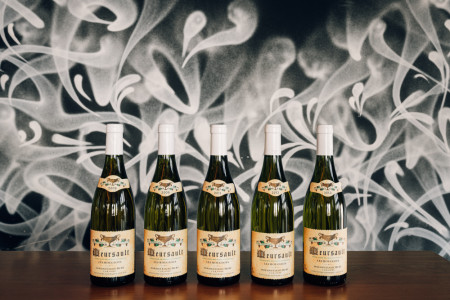
10 Things You Should Know About Domaine Coche-Dury
Their wines belong to the absolute Olympus of Burgundy – as rare as they are expensive. But anyone who has ever been lucky enough to taste even a sip of these precious wines will never forget their extraordinary complexity.
We are, of course, talking about the wines of Domaine Coche-Dury. In less than a century, this estate has become a true legend. Here’s what makes these wines so special – and the people behind their cult status.
1. Where is Domaine Coche-Dury located?
Welcome to the heart of Burgundy – specifically in the famous village of Meursault in the Côte de Beaune, one of France’s most renowned wine regions. The gently rolling hills of Meursault are world-famous for their limestone-rich soils, which provide ideal conditions for growing Chardonnay. Domaine Coche-Dury’s nine hectares of vineyards span various parcels in Meursault and neighboring communes such as Puligny-Montrachet, Auxey-Duresses, Monthelie, Volnay, and Corton-Charlemagne.
The winery itself is located in the picturesque village of Meursault. From there, winemaker Raphaël Coche and his wife Charline are never far from their vines – an important part of their winemaking philosophy. But before we get to that, let’s take a closer look at the estate’s roots.
2. What is the history of Domaine Coche-Dury?
It all began in the early 1920s with Léon Coche, who purchased his first vineyard plots in and around Meursault. At that time, the estate was known as Coche-Bouillicaut, as Léon was married to a woman from the Bouillicaut family. The wines were decent – but far from the legends we know today. Léon only vinified part of his grapes and sold the rest to local négociants. His son Georges Coche, who took over in 1964, expanded the vineyard holdings.
In 1973, Georges’ son Jean-François Coche took over the domaine with his wife Odile Dury, giving it its current name: Coche-Dury. He also introduced a new philosophy – each wine should be a unique reflection of its terroir. Every parcel was treated as an individual, distinctive expression of place. This uncompromising dedication quickly catapulted the domaine into Burgundy’s top ranks.
In 2003, Jean-François’ son Raphaël joined the family business, carrying on his father’s passionate approach. Since 2010, Raphaël and Charline have been at the helm. They spend time in the vineyards every day, convinced that true quality is born there. Despite their wines’ cult status, they refuse to compromise. Only the best grapes are used for Coche-Dury wines – others are either sold off or discarded. Wastefulness has never been part of the Coche DNA.
3. For which grape variety is Coche-Dury best known?
When your home is Meursault, the answer is obvious: Chardonnay. This is the undisputed star at Domaine Coche-Dury, covering over 90% of the vineyard area. The estate’s Meursault wines, especially from Premier Cru and Grand Cru sites, are now considered the ultimate reference point for white Burgundy.
4. What are Coche-Dury’s best vineyard sites?
Naturally, we begin with Meursault itself. Even the village-level wines, such as Les Rougeots and Les Chevalières, reach a quality level that many other producers’ Premier Crus can only dream of.
Among the Premier Crus, Perrières is one of Meursault’s most renowned vineyards, producing Chardonnays of great precision, finesse, and mineral depth. Genevrières yields wines of elegance, floral perfume, and silky texture. And Caillerets offers highly complex and refined expressions of Chardonnay.
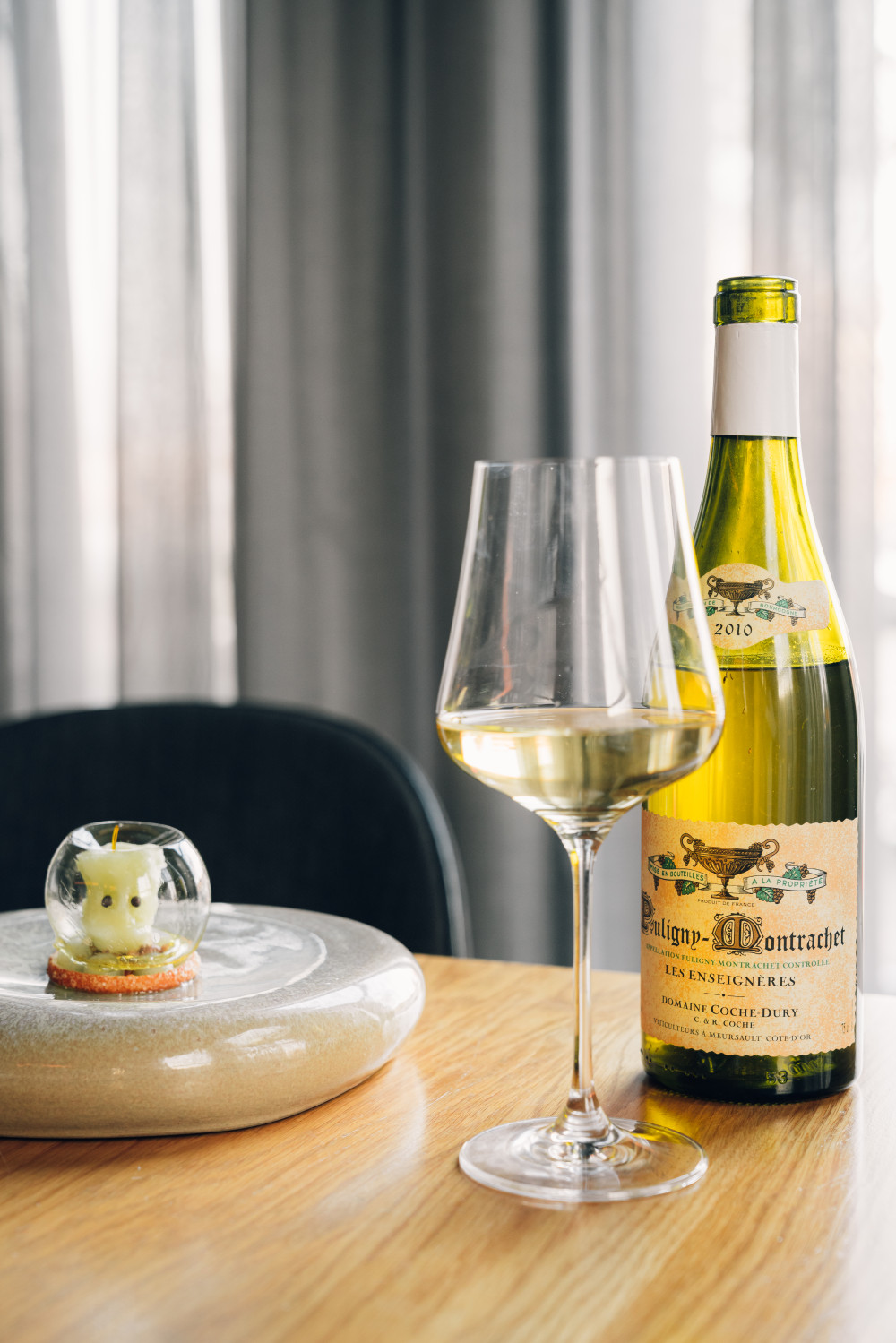
Outside Meursault, Coche-Dury crafts masterpieces from the half-hectare parcel Puligny-Montrachet Les Enseignières – among the most profound and complex Chardonnays in the world.
The estate’s most famous wine, however, is the Grand Cru Corton-Charlemagne, acquired in 1986 and expanded in 2012. These Chardonnays are known for their tremendous complexity, minerality, and longevity – consistently ranked among the best white wines in the world.
5. Does Domaine Coche-Dury produce only Chardonnay?
While the Chardonnays are legendary, the domaine also makes small quantities of other wines. About 6% of the white plantings are Aligoté, producing wines that are highly regarded yet very rare. Even rarer are the reds made from Pinot Noir, grown on 2.5 hectares in Auxey-Duresses, Monthelie, and Volnay. These reds remain somewhat overshadowed by the whites but offer excellent quality and remarkable value in comparison to the estate’s Chardonnay icons.
6. How are the wines made at Coche-Dury?
If one word captures Raphaël Coche’s philosophy, it’s “uncompromising.” Like his father before him, he demands absolute perfection from himself and his wines. During the growing season, he spends every day in the vineyards, ensuring meticulous attention to detail. Harvest takes place earlier than most, preserving acidity – an essential element in his style. All grapes are hand-picked and rigorously sorted.
The grapes are gently pressed to avoid excessive extraction and to preserve elegance. Fermentation occurs naturally, followed by aging in oak barrels (barriques) to build structure and complexity while maintaining a clear sense of terroir. Coche-Dury traditionally uses a high proportion of new oak, yet Raphaël manages to strike a perfect balance year after year. The wines remain on their fine lees with regular bâtonnage (stirring), giving them a creamy texture. They are bottled unfiltered with minimal sulfur additions – purity and precision above all.
7. What makes Coche-Dury’s wines so special
It’s the combination of multiple factors. Coche-Dury wines possess unmatched precision, depth, and individuality, even among Burgundy’s greats. They are instantly recognizable – distinctive, singular, and profound. Add to that their scarcity: only 45,000–60,000 bottles are produced annually, depending on the vintage. This rarity, coupled with uncompromising quality, makes them some of the world’s most sought-after wines. Gone are the days when you could buy a bottle of Meursault Premier Cru for €230.
8. Should you drink Coche-Dury wines young?
All Coche-Dury wines are great by nature – and yes, they can be enjoyed young, already showing pleasure and vibrancy. However, due to their high acidity, dense structure, and complex aromatics, they truly shine after several years of bottle aging. The great whites, especially from Corton-Charlemagne and the Premier Cru sites, should ideally age five to ten years or more to reach their peak, revealing additional depth, complexity, and secondary aromas that make them unforgettable.
9. What do Coche-Dury wines taste like?
It would be impossible to generalize – every wine has its own character and charm, and each vintage brings new nuances. Yet all share a distinctive reductive style, considered the domaine’s hallmark. Expect delicate notes of roasted hazelnuts, smoke, and flint, along with great depth and complexity. They are wines that make time stand still – a transcendent experience shared by only a handful of wines on Earth.
10. Are Coche-Dury wines a financial investment?
To speak of these wines as an investment almost feels like heresy given their hedonistic beauty – but yes, they are. Prices have risen by 130–500% in recent years, depending on the vintage. Their longevity and increasing rarity make them both a connoisseur’s treasure and a valuable asset. Bottles rarely appear on the open market; owning one means holding a piece of vinous history – and a potentially appreciating investment.
