
Insignia
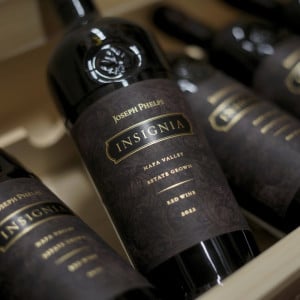
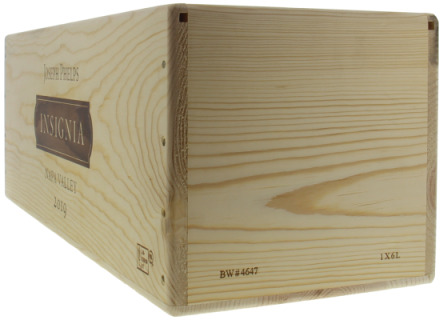
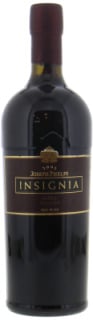
Insignia is California’s first Bordeaux-style red blend under a name that was entirely the winery's own invention, without identifying the grape varieties on the label. It was released in 1974 as Joseph Phelps Vineyards’ first vintage. Today, when nearly half of the producers in Napa Valley release their flagship blends, this may not seem like such an innovative move, but at the time, it was a true breakthrough.
American wine labels are accustomed to listing grape varieties for consumers, such as “Cabernet Sauvignon,” “Merlot,” “Chardonnay,” and so on. Joe Phelps decided that regardless of the varietal composition of a given year’s harvest, wine should be produced by blending the best batches each year. He named the wine itself, rather than a specific grape variety. Producers throughout the Napa Valley followed his example. Insignia is still produced according to this method today. There are no fixed recipes, no fixed blending ratios, it’s simply a blend of the best wines from select barrels sourced from this winery’s vineyards in Napa. This is precisely why this wine deserves attention, both then and now.
About Joseph Phelps
Joseph Phelps Vineyards started when Joseph Phelps, a Colorado building contractor, drove through Napa in the early 1970s, bought a cattle ranch near St Helena, and decided to make wine. By 1974 he'd released Insignia, California's first signature Bordeaux-style red blend, blending the best lots each year without a fixed formula. The estate now farms 11 vineyards across Napa and the Sonoma coast, still family-owned into the third generation.
History & Heritage
What’s interesting isn’t that Joe Phelps purchased the ranch in 1973, but that the first Insignia wine was released in 1974. Bordeaux-style blends had already existed in California prior to that, but until then there had never been a single instance where they were given their own name and sold as standalone wines. “Insignia” became a pioneer. This concept, which is not limited to a fixed blend of grape varieties and involves selecting the best batches from each year’s harvest, was subsequently widely emulated. The 2002 vintage was named “Wine of the Year” by Wine Spectator in 2005, and since then, “Insignia” has repeatedly received a score of 100 points. For a wine that began as an experiment, this is truly an impressive track record.
Terroir & Climate
Insignia is not tied to any specific vineyard. It is produced from carefully selected grapes grown on nine vineyards (covering a total area of about 172 hectares) located in St Helena, Rutherford, Oakville, Stags' Leap District, Oak Knoll District, South Napa and Carneros. It is precisely this broad geographic diversity that is crucial. St. Helena provides the volcanic terraces and warm climate necessary for Cabernet Sauvignon to fully ripen. Rutherford contributes the dusty tannins characteristic of this AVA (American Viticultural Area). Stags' Leap contributes bright aromas and softer tannins to the wine. The cooler wine-growing regions located closer to the southern border impart acidity and freshness to the wine. By blending grapes from these different AVAs, Joseph Phelps is able to create wines that are not tied to a specific microclimate. In warm years, the wines are well-balanced, while in cooler years, they develop greater depth.
Grape Varieties
Cabernet Sauvignon forms the foundation of the wine. It contributes aromas of black currant and graphite, as well as structure and aging potential. In addition, the blend is complemented by other Bordeaux-origin varieties, primarily the following:
- Cabernet Sauvignon: the primary variety in most vintages
- Petit Verdot: adds color, freshness reminiscent of violet aromas, and firm tannins
- Malbec: contributes plum flavors, soft tannins, and richness to the mid-palate
The exact proportions of the blend vary depending on the harvest. Petit Verdot certainly ripens well in Napa (although it is often difficult to grow in Bordeaux), so it plays an important role here rather than merely accounting for the nominal 2%. Malbec is the element that gives Insignia its richness, ensuring it never comes across as an austere wine.
Winemaking
A key factor in Joseph Phelps's approach is that Insignia is created not in the vineyards, but during the blending stage. Grape batches are harvested from all nine Napa vineyards; each is fermented separately and aged in French oak barrels. Then the tasting begins. Only those barrels that match the Insignia profile are included in the blend; the rest are used for bottling under other brands or sold. This is precisely why the character of this wine remains consistently recognizable in both warm and cool vintages. The blend does not merely reflect the vintage, it embodies it. When working with oak barrels, new French barriques (225-liter Bordeaux barrels) are widely used,in sufficient quantities to impart aromas of cedar and sweet spices without overshadowing the fruit flavors.
Food Pairing
Insignia wine possesses tannins and body that can hold their own even against hearty protein-rich dishes. Here are a few food pairings that go well with this wine:
- Dry-aged ribeye steak (simply grilled). The beef’s fat softens the tannins.
- Leg of lamb with rosemary. The herbal aroma harmonizes with the wine's spicy notes.
- Braised short ribs. Their richness pairs perfectly with the wine’s body in the mid-palate.
- Mature hard cheeses, such as 2-year-aged Cheddar. The umami flavor highlights the wine’s fruity notes.
Serve at 16–18 °C. Avoid dishes that are too spicy or acidic. Sauces with a high tomato content not only fail to highlight the tannins but also clash with them.
Serving Suggestions
Serve at 18–20 °C. Young vintages should be decanted for at least 90 minutes to allow contact with air. Exposure to air is necessary for the oak aromas and tannins to mellow. For wines aged in the bottle for more than 15 years, 30 minutes is sufficient, but be careful of sediment. Large Bordeaux glasses are suitable for these wines. The wide bowl allows the aromas of black currant and cedar to fully unfold.
The best vintages of Insignia
Insignia wine exhibits less variation in quality from vintage to vintage than most of Napa’s flagship wines, and this is precisely the point of blending grapes from multiple vineyards. Nevertheless, the importance of a specific vintage remains unchanged. In warm years, the wine is richer and more vibrant, with intense fruit notes and soft acidity, allowing it to be enjoyed even when young. In cooler years, the wine develops a robust structure and deep flavor, characterized by graphite nuances and firm tannins, making it suitable for long-term aging. Older vintages, especially those from the early 2000s, generally command high prices, as the oak notes have already been well integrated into the wine. For everyday enjoyment on weekdays, we recommend choosing warm vintages that have been aged for about 10 years. For long-term aging, recent cool vintages are a wiser choice.
Some of the best or most legendary vintages are: 1991, 1997, 2002, 2007, 2013 and 2015.
Cellaring Potential
Insignia wine from exceptional vintages can be aged for several decades. In addition to the tannic structure derived from the Cabernet Sauvignon and Petit Verdot grape varieties, the acidity characteristic of cool southern regions forms a framework that retains its strength even after more than 20 years. Store the wine at a stable temperature of 12–14 °C in a place protected from light.
