

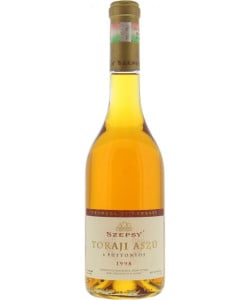
Tokaji: The Wine of Kings from the Hills of Northeast Hungary
In the north-eastern part of Hungary, where two rivers, the Bodrog and the Tisza, converge, there is a small town. In autumn, thick fog rises above the surrounding vineyards in the mornings due to the slight difference in water temperature. This fog is not just an atmospheric effect. It is the reason for the existence of one of the most remarkable wines in the world.
Tokaj spent several decades in the shadows, under state control, overshadowed by Bordeaux and Burgundy, and it was only after 1990 that it was gradually rediscovered. But this region has something that cannot be created artificially: a unique combination of climate, volcanic soil, local grape varieties and a production method that has been perfected over 400 years. The wines produced here, both the legendary sweet ones and the increasingly popular dry ones, are unlike anything else.
Welcome to Tokaj.
A History That Starts Before the Wine
People have been growing grapes in the Tokaj region since at least the time of the Roman Empire, a fossilised vine leaf found in the village of Erdbénye dates back to the 3rd century AD. But the wine that made Tokaj famous has a more specific date of birth, or at least a good story about it.
Around 1620, vineyard manager László Mátyás Szepsi deliberately produced aszú wine for the first time: a sweet wine affected by botrytis, which subsequently conquered the royal courts of Europe. The story goes that due to a delay in harvesting (possibly due to the threat of a Turkish invasion), the grapes dried on the vines. Rather than discarding them, the winemakers decided to use them. What came out of these shriveled berries was extraordinary.
Tokaj's importance was recognised early on and officially. In 1737, Emperor Charles VI issued a decree establishing Tokaj as a closed, regulated wine region, making it one of the world's first official appellations, predating the Bordeaux classification by more than a century. In 2002, UNESCO included the historic cultural landscape of the Tokaj wine region in its World Heritage List.
But the 20th century was a difficult one. Two world wars, the 1920 Treaty of Trianon (which divided the historic region between Hungary and the newly created Czechoslovakia), phylloxera at the end of the 19th century, and then decades of state control during the Soviet era, when quantity was prioritised over quality, all left their mark. After 1990, when the communist system collapsed, independent producers began to rebuild production. Today, Tokaj has returned to its former position.
The Wines
Tokaj produces a wider range of wines than most people realise. Sweet wines attract most of the attention, but dry white wines are now rapidly gaining popularity.
Tokaji Aszú is the most well know variety. It is a sweet wine made from grapes affected by botrytis: berries infected with the beneficial mould Botrytis cinerea, which pierces the skin, dries the berries and concentrates the sugar and aroma. The level of sweetness is measured in puttonyos. Traditionally, this is the number of 25-kilogram baskets (puttonyos) of botrytis-infected berries added to a barrel of base wine. Today, the scale is based on residual sugar: standard Aszú must reach at least 120 g/l, and 6 puttonyos from 150 g/l.
Eszencia is the rarest and most extreme expression, juice that naturally drains from vats of aszú berries under its own weight before they are pressed. The sugar concentration can exceed 500 g/l, making it impossible for the yeast to ferment completely.
Most Eszencia never exceeds 5% alcohol. It is not so much a wine as a thick syrupy nectar that can be aged for centuries. Szamorodni, a word of Polish origin meaning ‘as it is’, is made from whole bunches containing a mixture of healthy and botrytised berries.
There are both sweet (édes) and dry (száraz) versions. The dry version is aged under a yeast film, acquiring nutty, oxidative notes somewhat reminiscent of Fino sherry.
Dry Furmint and Hárslevelű are the rising stars. They were less known and popular than the sweet wines for many years, but these dry white wines are now getting serious international attention thanks to their acidity, minerality and ageing potential.
The Style
Tokaji Aszú is not simply sweet. Its uniqueness lies in its balance. Despite a residual sugar level that can significantly exceed that of Sauternes or German Beerenauslese, a well-made Aszú never seems cloying because its acidity is equally intense. Volcanic soils and the Furmint grape variety contribute to this characteristic sharpness. There are aromas of apricot, orange peel, honey, ginger and dried fruit, which are accentuated by a bright, almost piercing freshness.
Dry Furmint from the best vineyards shows a different side: stony, austere, with high acidity, hints of green apple when young and a more complex, honeyed texture with age. Think of it as a kind of Chablis, but with its own unmistakably Hungarian character.
The Vineyards
The Tokaj wine region covers approximately 5,500 hectares of vineyards located in 27 towns and villages in north-eastern Hungary, as well as a small adjacent area of about 900 hectares in Slovakia, a legacy of the establishment of borders after the First World War.
The vineyards form a rough triangle between the hills of Sátoraljaújhely in the north, Abaújszántó to the west, and the town of Tokaj itself in the south, where Mount Tokaj, an extinct volcano, rises to 514 metres above the confluence of the two rivers. The vines are planted on slopes facing south and southwest, giving maximum sun exposure during the growing season.
The village of Mád is widely considered the quality heartland of the region. Its volcanic soils are so rich in minerals that geologists have identified 30 different types of mineral underfoot in some plots. Individual vineyard parcels (dűlők), a system somewhat like Burgundian crus, are increasingly being recognised and labelled by producers as the dry wine movement grows.
The Terroir
Tokaj lies within a kind of a natural basin, sheltered from cold winds by the Srem Mountains to the north. The Hungarian Great Plain to the south brings the high summer temperatures, which is essential for the grape ripening. Rivers bring the essential humidity and the autumn mists: these conditions take care of the consistent development of Botrytis year after year.
The soil is volcanic, deposited upon bedrock formed approximately 7.5 million years ago. The toplayer of the soil consists of a mixture of clay, loess, and volcanic materials including rhyolite, andesite, and pumice: all varying by locality. Volcanic soils typically bring wines with mineral flavours and natural acidity, the qualities that enable Tokaj Furmint wines to age exceptionally well. In contrast, loess soil areas produce wines with softer profiles and more fruit aromas.
The cellars are another important item of the terroir's history. Between 1400 and 1600 AD, villagers manually carved a large network of subterranean galleries through the volcanic rocks. These cellars maintain a constant temperature of approximately 10-12°C and humidity levels of 85-90%, which are ideal for the slow maturation of sweet wines. The cave walls are covered with a distinctive black mould (Cladosporium cellare), which feeds on volatile alcohols: a genuine and perfect cellar.
The Grapes
The Tokaj region officially recognises six grape varieties. However, the two most significant are typical for the area.
Furmint is planted on 60-70% of the vineyard acreage. With its high acidity and susceptibility to noble rot, it produces both the region's most opulent sweet wines and dry whites possessing remarkable ageing potential. Young Furmint displays fresh notes of green apple and citrus; with ageing, its flavours gradually evolve into honeyed, nutty and waxy layers.
Hárslevelű (pronounced “harsh-level-oo”, meaning “linden leaf”) occupies the majority of the remaining vineyards. Its bouquet is more intensely floral than Furmint, adding richness and fragrance to blended wines.
Sárgamuskotály (Yellow Muscat) imparts a lively character and intense floral notes. Kabar, Kövérszőlő and Zéta are permitted for cultivation in smaller proportions.
How the Wine Is Made
The production of Tokaji Aszú requires a level of labour that most wine-producing regions would consider remarkable. During the harvest, pickers go through the vineyard several times, sometimes up to 30 times, and select only the berries that are completely affected by botrytis, one by one. An experienced picker can harvest less than 10 kg per day.
The selected Aszú berries are crushed to a paste and then macerated in base wine, grape juice or fermenting must for 24–48 hours, stirring periodically. The longer the maceration, the more sugar and aroma is extracted. The liquid is then drained and placed in traditional 136-litre Gönc barrels, smaller than a standard Bordeaux barrel, for ageing in underground cellars. The minimum ageing period for Aszú is 18 months in the barrel, after which, as a rule, additional ageing in the bottle follows before release. In practice, many producers age their wines for much longer.
The barrels are not sealed, allowing for slow oxidation and continued fermentation over months or years. It is this gradual process that gives aged Tokaj wine its characteristic complexity.
For dry wines, the approach is more straightforward: fermentation in stainless steel or oak, with producers increasingly experimenting with bottling wines from a single vineyard to express the differences between plots.
Famous Tokaji Wines and Producers
The history of Tokaj after 1990 is largely the history of foreign capital investment in Hungarian winemaking. When communism collapsed and the state farm system was abolished, a wave of foreign investors from France, Spain, the United States and the United Kingdom flooded into the region, attracted by its exceptional reputation and four years of neglect. The results achieved over three decades are impressive.
István Szepsi is the name that first comes up in any serious conversation about Tokaj. In the early 2000s, he introduced the first serious dry Furmint wines from Tokaj, notably his single vineyard Úrágya 2000, which was compared to the best white wines of Burgundy for its minerality, structure and ageing potential. His 6 Puttonyos Aszú, made only from the most shriveled and concentrated berries, is considered the benchmark for this style.
Royal Tokaji was the first private winery in the region after communism, founded in 1990 by a group that included legendary English wine writer Hugh Johnson, a bronze bust of him stands on the winery grounds. It was built with a clear philosophy: to strive for excellence, to focus on Aszú wines from a single vineyard and to make them as good as possible. The estate owns plots in several of the most prestigious vineyards around Mád, Nyulaszó, Szent Tamás, Bécsek and Mészes Mali and bottles Aszú from each of them, as well as blended wines with varying degrees of sweetness. Eszencia from Royal Tokaji is one of the most expensive wines produced in the region. Today, the company is run by the De Laszlo family, who have Hungarian roots but live in England. In 2010, it was named one of the 100 best wineries of the year by Wine & Spirits magazine.
Disznókő is one of the large estates founded by foreign investors in the early 1990s, in this case by the French insurance and investment group AXA Millésimes, which also owns Château Pichon Baron in Bordeaux and Quinta do Crasto in Douro. The estate covers about 100 hectares near Mezsombor and is managed by local winemaker László Mészáros. Aszú wines from Disznókő are known for their freshness and multi-layered fruit character rather than overwhelming sweetness, these wines are made to be paired with food, not just drunk as a dessert. The winery building, designed in 1993 by Hungarian architect Dezső Eklér, is an attraction in itself.
Oremus brings one of Spain's most famous names to Hungary. In 1993, Vega Sicilia, producer of one of Spain's most iconic and sought-after red wines from Ribera del Duero, founded Oremus in the village of Tolcha with 115 hectares of some of the region's best land. Oremus produces some of the most consistently highly rated Aszú wines in the region, as well as a truly high-quality dry Furmint wine.
Patricius stands out as one of the rising stars of today. Located in Bodrogkiszfalud, this estate received a platinum medal (98 points) at the 2021 Decanter World Wine Awards for its 2017 Aszú 6 Puttonyos, one of 179 wines out of more than 18,000 submitted to the competition that received this award. Patricius has also attracted attention for its work with Furmint sparkling wine, made using traditional methods, with their Brut aged on the lees for 54 months.
Zoltán Demeter deserves a mention as one of the region's most respected small independent producers, based in the town of Tokaj itself and owning just seven hectares of land. Known for his almost maniacal perfectionism and fierce commitment to Tokaj's cultural heritage, Demeter produces wines in very limited quantities, which critics often cite as some of the most appealing in the region.
Tokaj's post-communist revival has not been without any tension. Foreign investors brought capital and ambition, but also different ideas about style: how much new oak, how much sweetness, how long to age. These debates have largely been resolved, and the best producers from both camps agree that the wines should clearly reflect the region's volcanic terroir and age well. As a result, Tokaj is now more diverse, more interesting and perhaps producing better wines than ever before in its long history.
Three Fun Facts
1. It's in the Hungarian national anthem. The "nectar of Tokaj" is mentioned directly in Himnusz, the Hungarian national anthem, written by Ferenc Kölcsey in 1823. No other wine in the world can claim to be written into a country's anthem.
2. Louis XIV called it the King of Wines. Or more precisely, the quote most often attributed to him "Vinum Regum, Rex Vinorum" (Wine of Kings, King of Wines), was used to describe Tokaji at the French court in the 17th and 18th centuries. Tsar Peter the Great of Russia was also a known admirer. Bottles of Tokaji passed between European monarchs as diplomatic gifts, and the Habsburg imperial cellars maintained private reserves of the finest Eszencia, which was not sold commercially.
3. Eszencia can age for 200 years or more. Because the extreme sugar content slows fermentation almost to a standstill, Eszencia barely qualifies as wine: it often reaches only 3–5% alcohol. But that same sugar acts as a preservative. Historical records describe bottles of Tokaji Eszencia from the 18th century still being served at diplomatic functions in the early 20th century. In 2008, a bottle of Imperial Tokay with a royal Saxon court cellar seal sold at Christie's for nearly £2,000. The wine inside was very old, though exactly how old nobody could say for certain.
