A Few Things to Keep in Mind
It would be easy to read the Judgment of Paris as a simple story of American triumph over French snobbery, and that version has been told many times. But it's a bit more complicated than that.
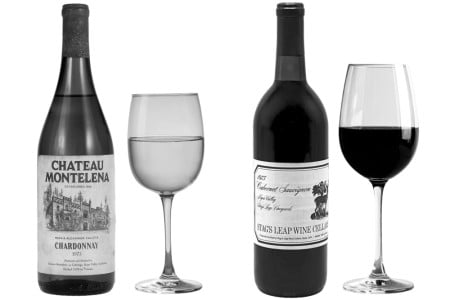
For one thing, the margins were small. The gap between the winning Stag's Leap and second-place Mouton-Rothschild in the reds was 1.5 points out of a combined total of over 120. These were not normal French wines; they were excellent bottles that lost by a whisker. For another, Aubert de Villaine, the co-director of Romanée-Conti and one of the most eminent figures in French wine, was himself one of the judges and he was perfectly happy to admit what he had tasted and scored.
It also bears repeating what Patricia Gallagher said: this was never meant to be a competition. Spurrier was not trying to humiliate French wine. He genuinely liked and respected it. He ran a French wine shop. The event was, at its core, an attempt by two people who were excited about California wines to share that excitement with knowledgeable friends. The result surprised everyone, including Spurrier.
The event also wasn't entirely ignored by criticism. Some statisticians later pointed out that when the scores of all eleven judges, including Spurrier and Gallagher, were included, the rankings shifted somewhat, and that only the top two wines in each category could be considered statistically distinguishable from the others. The competition, in other words, was genuinely close throughout.
But none of that changes the core fact of what happened on May 24, 1976, in a hotel in Paris: nine of the finest palates in the French wine world tasted twenty wines blind, and when the scores were counted, California was at the top of both lists. George Taber was there to write it down, the rest of the world eventually read about it, and wine was never quite the same again.