
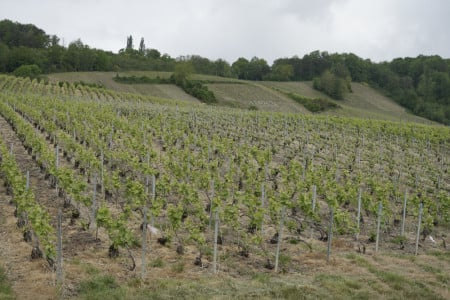
Have you ever wondered why pretty much every detail surrounding the world's most famous sparkling wine is regulated in Champagne? The growing area is limited to 34,200 hectares, divided precisely into several sub-regions, and the grape varieties and production methods are also specified. Yes, even the yield limit is precisely specified each year by the Comité Champagne. Now, one might think that all these strict regulations have only one goal: to ensure the exceptional quality of sparkling wine for which Champagne is famous worldwide. But in fact, that is only half the truth.
At the beginning of the 20th century, the law of the jungle still prevailed in this prestigious wine-growing region. The champagne houses had enormous freedom, while the winegrowers were mostly left behind. This mixture was an economic and social powder keg that exploded twice in 1911 with the Champagne riots – and in the aftermath of which this comprehensive set of rules was established, which still serves as a straitjacket for producers today. Let's take a trip back in time.